Zvodeps: Complete Guide to the Emerging Digital Productivity Concept
Zvodeps is an emerging term that has attracted attention in online discussions about digital productivity, creative work, workflow management, and modern ways of organizing projects. The term is still relatively new, and its meaning is not yet fixed in the way established concepts such as Agile, Scrum, or project management are.
Several online sources describe Zvodeps as an adaptive workflow concept that connects creative thinking with structured execution. Other sources are more cautious and point out that there is no widely recognized official definition, standard, certification, or universally accepted software product associated with the name.
This difference is important. Instead of presenting speculation as fact, it is more useful to understand Zvodeps as an emerging idea that can be interpreted through the common themes appearing around it: creativity, flexibility, digital productivity, collaboration, continuous improvement, and adaptive workflow design.
In simple terms, Zvodeps can be viewed as a way of thinking about work in which people begin with ideas, organize those ideas into practical goals, create a flexible workflow, execute the work, learn from feedback, and adjust the process when circumstances change.
For American professionals, freelancers, entrepreneurs, marketers, designers, developers, consultants, and remote teams, this idea is particularly relevant because modern work rarely follows a perfectly predictable path. Projects change. Customers provide new information. Priorities move. New technologies appear. A useful workflow therefore needs structure without becoming so rigid that it prevents improvement.
What Is Zvodeps?
Zvodeps is best understood as an emerging concept related to adaptive workflow management and digital productivity. Current online descriptions commonly connect it with the idea of combining creative exploration and structured execution.
The most practical interpretation is that Zvodeps provides a way to move from an initial idea toward a completed result without forcing every project through the same fixed process.
Traditional productivity systems often begin with tasks. A person creates a list, assigns deadlines, checks boxes, and moves to the next item. That approach can work well when the work is predictable.
Creative work is different.
A designer may discover a better visual direction halfway through a project. A software developer may learn from testing that a planned feature is not useful. A marketing team may change its campaign after customer feedback. A startup may completely change its product strategy after talking with users.
An adaptive approach allows these changes without treating them as failures.
That is where the central idea behind Zvodeps becomes useful. Instead of seeing planning and creativity as competing forces, it treats them as connected parts of one workflow.
The concept can therefore be summarized as:
Idea → exploration → structure → action → feedback → improvement
The exact definition of Zvodeps may continue to change as more people use the term. For now, readers should avoid treating every online claim about Zvodeps as an established fact.

How Does the Zvodeps Workflow Work?
A practical Zvodeps-style workflow can be understood as a continuous cycle rather than a straight line.
The first stage is idea collection.
People capture problems, opportunities, customer requests, observations, creative concepts, and possible solutions without immediately forcing them into a rigid project plan.
The second stage is idea shaping.
The team asks questions such as:
What problem are we solving?
Who has this problem?
What outcome do we want?
Which ideas appear realistic?
What information is missing?
The third stage is workflow design.
Once the direction becomes clearer, the team converts the idea into practical work. Responsibilities, milestones, deadlines, dependencies, and priorities can be added.
The fourth stage is execution.
The team completes the work while monitoring progress and collecting new information.
The fifth stage is feedback.
Also Read: TrendyWinner Com: Complete Guide to Trending Topics, Website Reviews & Online Insights
Instead of treating completion as the end, the team studies what happened.
Did the result meet the goal?
What worked?
What failed?
What surprised us?
What should change?
The sixth stage is refinement.
The next version of the workflow or project is adjusted based on what the team learned.
This cycle makes Zvodeps different from a simple checklist. The workflow is considered a living system rather than a document that becomes outdated as soon as circumstances change.
The Core Principles Behind Zvodeps
Although there is no universally standardized Zvodeps rulebook, several principles commonly appear in descriptions of the concept.
The first is structure without unnecessary restriction.
A good workflow should create clarity. People should know what needs to happen, who owns each responsibility, and what the desired outcome is. However, excessive rules can make creative work slower.
The second principle is creativity before premature commitment.
A team should have enough time to explore possibilities before selecting one direction. This reduces the risk of choosing the first acceptable idea simply because it is easy to organize.
The third principle is continuous feedback.
Feedback should not arrive only after everything is finished. It can be collected throughout the process.
The fourth principle is adaptability.
A workflow should be able to change when better information becomes available.
The fifth principle is connection between ideas and execution.
An idea should not remain trapped in brainstorming notes. The system should provide a clear path from concept to practical action.
These principles make the concept relevant to modern teams because they address a common weakness of digital productivity: organizing work without improving the thinking behind that work.
Zvodeps and Creative Productivity
Creative productivity is often misunderstood.
Many people believe creativity requires complete freedom. In reality, unlimited freedom can create its own problems. A person may generate hundreds of ideas without completing any of them.
The opposite problem is excessive structure.
If every creative decision must follow a fixed template, people may stop experimenting.
Zvodeps attempts to occupy the middle ground.
The idea is not to remove structure. It is to introduce structure at the right time.
For example, a writer working on a large content project might first collect possible topics, audience questions, examples, and personal observations. After exploring those possibilities, the writer can create an outline and production schedule.
The structure comes after initial exploration.
A product designer could follow a similar pattern. Instead of beginning with a rigid specification, the designer could first study user needs, sketch different solutions, test assumptions, and then establish a more detailed production plan.
This approach can protect creativity while still creating accountability.
The deeper insight is that productivity should not only measure how quickly someone completes tasks. It should also consider whether the tasks being completed are the right tasks.
Zvodeps for Digital Productivity
Digital productivity is one of the most natural areas for the Zvodeps concept.
Modern productivity software is excellent at storing information and organizing tasks. The challenge is deciding what belongs in the system and when the system itself should change.
A Zvodeps-style productivity setup could include:
Idea capture
Project planning
Task management
Priority setting
Collaboration
Feedback collection
Automation
Performance review
Workflow improvement
The important point is that these components should work together.
For example, a new idea should have a clear path into the project system. A completed task should generate useful information for future decisions. Customer feedback should be able to influence priorities. Analytics should help determine whether the workflow is producing the desired result.
This creates a feedback-driven productivity environment.
The goal is not to make people constantly busy.
The goal is to make digital work more intentional.
Is Zvodeps a Software Platform or a Workflow Philosophy?
This is one of the most important questions surrounding Zvodeps.
Current online information does not provide strong evidence for treating Zvodeps as a mature, universally recognized commercial software application. Several sources describe it instead as a framework, philosophy, or conceptual workflow approach.
At the same time, some websites present Zvodeps as a potential platform or describe software-like features around the concept.
The safest interpretation is therefore to separate the concept from a specific product.
A person can use Zvodeps-style principles with existing digital tools without needing a dedicated Zvodeps application.
For example, a team could use:
A document for idea collection
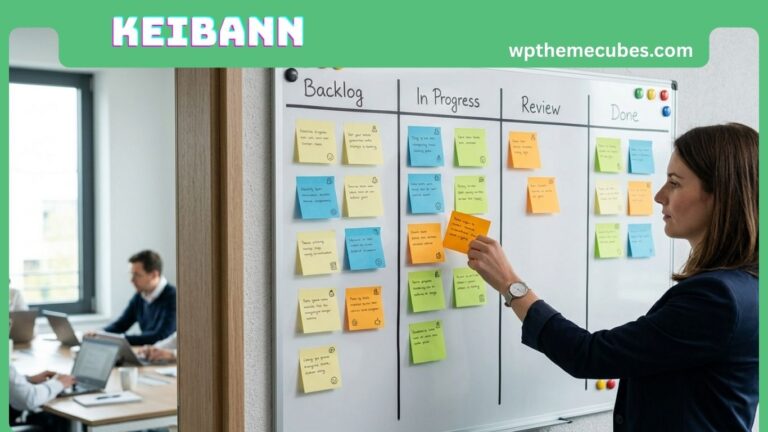
A whiteboard for brainstorming
A project management system for execution
A communication platform for collaboration
Analytics software for measurement
Automation tools for repetitive work
The concept is the method. The software is the implementation layer.
This distinction is important because readers searching for Zvodeps should not assume that every website describing a “Zvodeps platform” represents an official commercial product.
How Zvodeps Could Help Businesses and Startups
Startups are especially suited to adaptive workflows because uncertainty is part of the startup environment.
A young company may begin with an idea, develop a prototype, speak with customers, discover a problem, change the product, test pricing, and adjust its marketing strategy.
A rigid process can make these changes expensive.
An adaptive approach can make them easier to manage.
For example, a startup developing a mobile application could use a Zvodeps-style process:
First, collect customer problems.
Next, identify the most important problem.
Then, generate several possible solutions.
Select the smallest useful version.
Build an MVP.
Test it with real users.
Collect feedback.
Measure behavior.
Change the product.
Repeat.
The key advantage is that the workflow does not treat the original plan as sacred.
The goal remains stable, but the path can change.
For startups, this can reduce wasted effort because teams have more opportunities to stop, learn, and redirect resources before investing too heavily in the wrong solution.
Zvodeps for Remote and Distributed Teams
Remote work creates another strong use case.
When people work in different cities, states, or countries, teams need more than communication. They need shared context.
A remote employee should be able to understand:
What are we trying to achieve?
Why does it matter?
What has already been decided?
What is currently being tested?
Who owns the next step?
What feedback has been received?
What changed recently?
An adaptive workflow can help make this information visible.
For example, instead of keeping ideas inside private conversations, a team can maintain a shared idea space. Once an idea becomes important, it can move into an active project. Decisions can be documented. Tasks can be assigned. Feedback can be connected to the relevant work.
This reduces the amount of information that exists only inside meetings or chat messages.
The result can be better alignment without requiring every employee to attend every discussion.
Zvodeps in Software Development and Product Management
Software development is another area where an adaptive approach can be useful.
Developers often work with changing requirements. Customers request new features. Bugs appear. Technical limitations become visible. Security concerns can change priorities.
A useful development workflow therefore needs structure and flexibility.
Zvodeps-style thinking could support the early stages of product development by connecting customer problems with technical decisions.
A team might begin with an idea board containing:
Also Read:Success100x.com Factors: 4 Keys to 100x Growth and Success
Customer complaints
Feature requests
Technical problems
Market opportunities
Experiment ideas
Competitor observations
The team can then evaluate these items and move the most valuable ones into a development workflow.
Once work begins, feedback from users, testing, analytics, and developers can influence future priorities.
Product managers can therefore avoid treating the roadmap as a permanent promise.
Instead, the roadmap becomes a working model that changes when reliable evidence changes.
This is particularly important in fast-moving technology markets.
Zvodeps for Marketing, Design, and Content Teams
Marketing and creative teams often face a difficult balance between deadlines and experimentation.
A campaign needs to launch on time, but the best creative direction may not be obvious at the beginning.
A Zvodeps-style system could help marketers separate exploration from execution without disconnecting them.
For example, a campaign could begin with research and idea generation.
The team might develop several messages, visual concepts, audience angles, and content formats.
After reviewing the options, the strongest direction becomes the campaign plan.
During execution, performance data can influence the next round of work.
If one message performs better than another, the team can adjust future content.
If customers respond differently than expected, the strategy can change.
For content teams, the same idea applies.
Instead of treating an editorial calendar as completely fixed, teams can leave room for timely topics, audience questions, performance insights, and new opportunities.
This produces a more responsive content operation.
Benefits and Limitations of Zvodeps
The potential benefits of Zvodeps are closely connected to its flexibility.
One benefit is better creative freedom.
People can explore ideas before committing to detailed execution.
Another is improved adaptability.
Teams can respond to new information without completely rebuilding their systems.
A third benefit is stronger connection between creativity and execution.
Ideas have a clearer path toward practical action.
A fourth benefit is better learning.
Feedback becomes part of the workflow rather than an afterthought.
A fifth benefit is improved alignment.
When ideas, decisions, responsibilities, and feedback are visible, teams can develop a shared understanding of the work.
However, Zvodeps also has limitations.
The biggest limitation is the lack of standardization.
Because the term is still emerging, different sources describe it in different ways. There is no universally accepted methodology that every organization can implement in exactly the same way.
Another limitation is that flexibility can become disorder.
If every decision can change at any time, teams may struggle to finish projects.
This means adaptive workflows still need boundaries.
Teams should define goals, decision owners, review points, and deadlines. Flexibility should exist within a clear operating structure.
The concept also should not be treated as a guaranteed productivity solution. A workflow only works when people use it consistently and when it fits the actual nature of the work.
How to Apply Zvodeps in Everyday Work
Someone does not need a special app to experiment with Zvodeps-style productivity.
Start with one active project.
Write down the desired outcome.
Then create a space for ideas and possible approaches.
Do not immediately convert every idea into a task.
Review the ideas and identify the strongest direction.
Once the direction is clear, create practical tasks.
Assign responsibilities.
Set a realistic deadline.
Begin execution.
During the project, collect feedback.
If new information changes the situation, update the workflow.
At the end, review the result.
Ask:
What worked?
What did not work?
What should we repeat?
What should we stop?
What should we change?
What did we learn?
This creates a simple adaptive cycle.
For an individual, the same process can be used for writing, studying, freelancing, business planning, or personal projects.
For a team, it can be applied to campaigns, product development, software projects, consulting engagements, and creative production.
The important thing is to start small.
Trying to redesign an entire organization around a new concept immediately can create unnecessary complexity.
A single project provides a safer testing environment.
What Is the Future of Zvodeps?
The future of Zvodeps is still uncertain.
That uncertainty is part of the reason the term is attracting attention.
One possible future is that it remains an informal productivity concept. People may continue using the word to describe flexible, creative-first workflows without creating a formal standard.
Another possibility is that the idea develops into a more defined methodology.
If practitioners begin using consistent principles, terminology, processes, and measurement methods, the concept could become easier to recognize and teach.
A third possibility is the development of software inspired by the idea.
A dedicated platform could potentially combine brainstorming, project management, workflow automation, AI assistance, feedback, analytics, and collaboration in one environment.
However, such a future should be viewed as a possibility rather than a confirmed fact.
The strongest opportunity may actually be broader than the name itself.
Digital work is moving toward systems that can adapt to people rather than forcing people to adapt completely to software.
Artificial intelligence, automation, remote collaboration, and real-time analytics all make adaptive workflows more practical.
That means the underlying principles associated with Zvodeps may remain useful even if the term itself changes.
Also Read:SEO Agency in USA Glorvix: Services, Benefits & Expert Guide
Frequently Asked Questions About Zvodeps
Is Zvodeps an officially recognized productivity methodology?
No universally recognized standard or official methodology for Zvodeps has been established. Current online descriptions vary, with many presenting it as an emerging workflow concept or philosophy rather than a formal system.
Can Zvodeps be used without special software?
Yes. If Zvodeps is treated as an adaptive workflow philosophy, its principles can be applied with ordinary productivity tools such as documents, task managers, calendars, whiteboards, spreadsheets, and collaboration platforms.
Is Zvodeps the same as Agile?
No. Agile is an established approach with a significant body of documented principles and practices. Zvodeps is a newer and less standardized concept. It may share ideas such as adaptability and feedback, but it should not be presented as another name for Agile.
Is Zvodeps suitable for individual workers?
Yes. The underlying idea can be adapted for individual work. A freelancer, writer, designer, student, entrepreneur, or independent professional can use an idea-to-execution workflow that includes regular review and adjustment.
Can Zvodeps replace project management software?
Not necessarily. Zvodeps is better understood as an approach to organizing work. Project management software can provide the digital infrastructure needed to implement that approach.
Conclusion
Zvodeps is best approached with both curiosity and caution.
The term is appearing online in connection with creative workflow management, digital productivity, adaptive planning, and flexible execution. At the same time, there is no single universally accepted definition, and some online descriptions make claims that go beyond what can currently be independently established.
The most useful interpretation is therefore not to treat Zvodeps as a mysterious piece of software or a fully established management standard.
Instead, think of it as an emerging way to connect creative thinking with organized digital work.
Its strongest idea is simple: structure should help people move forward, not prevent them from changing direction when better information appears.
A strong workflow gives people clarity without removing creativity.
It creates goals without pretending that every step can be predicted.
It encourages action without ignoring feedback.
It measures progress without confusing activity with meaningful results.
For modern American workplaces, startups, remote teams, freelancers, marketers, designers, developers, and creative professionals, these principles can be valuable even without adopting the word Zvodeps itself.
The real test of any productivity concept is practical. Does it help people make better decisions? Does it reduce unnecessary work? Does it improve collaboration? Does it help teams turn good ideas into useful results?
If the ideas associated with Zvodeps can consistently answer those questions with evidence, the concept may become more defined and influential over time.
For now, the smartest approach is to use the useful principles, remain careful about unsupported claims, and treat Zvodeps as an emerging concept rather than an already established industry standard.