Keibann: Complete Guide to Visual Workflow and Task Management
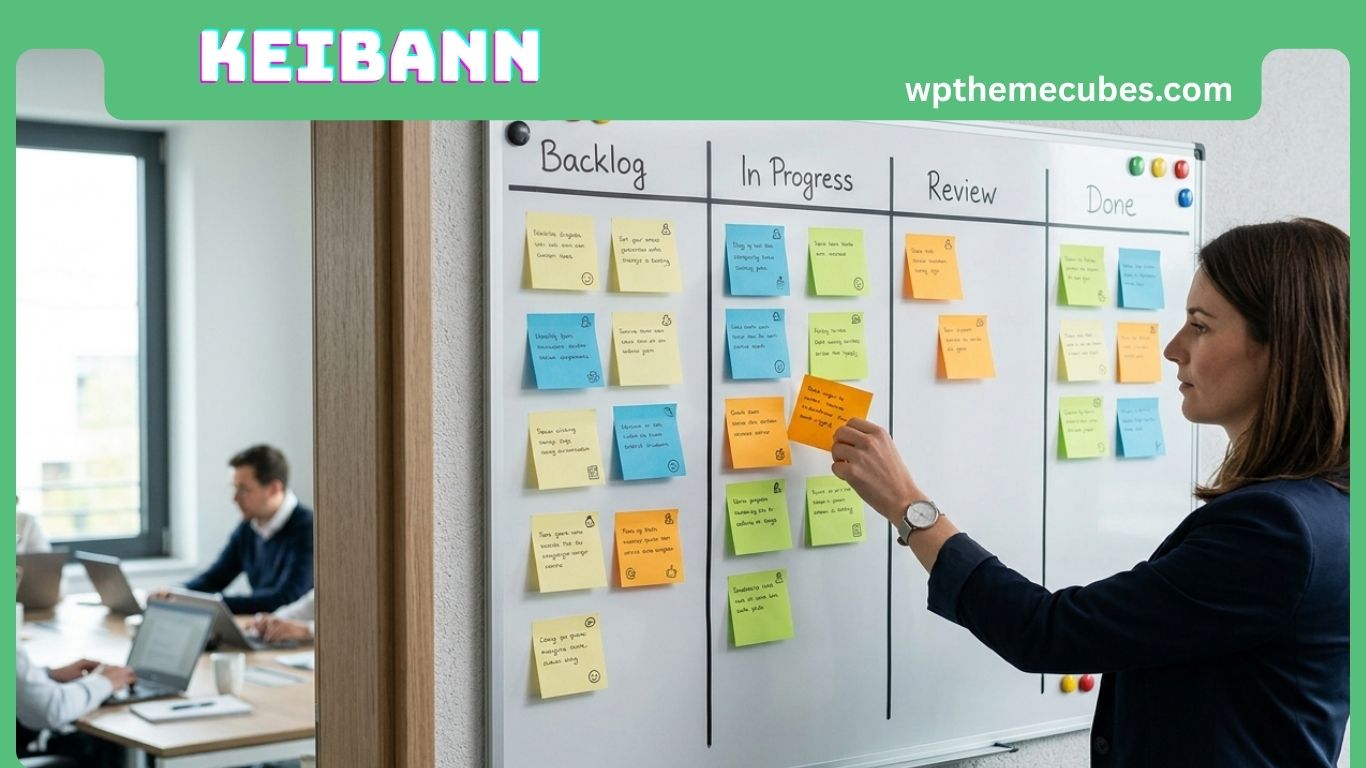
Keibann is a visual workflow approach that helps people organize tasks by using boards, cards, and progress stages. Instead of keeping work in long lists, scattered notes, or different apps, a visual workflow gives tasks a clear place and status. This makes it easier to see what needs to be done, what is currently being worked on, and what has already been completed.
The term “Keibann” may appear unfamiliar to many people in the United States. It can also be confused with the more widely known concept of “Kanban,” a visual work-management method used in software development, business operations, manufacturing, education, and personal productivity.
Because the spelling “Keibann” is less common, it is important to understand the difference between the keyword and the established workflow concept it may refer to. In many searches, people may simply be looking for information about visual task boards, Kanban-style planning, workflow management, or productivity systems.
This guide explains Keibann from that practical and informational perspective. It covers what Keibann means, how a visual workflow works, how boards and cards are used, its benefits and limitations, common use cases, digital tools, privacy considerations, and how beginners can create a simple workflow.
What Is Keibann?
Keibann is a visual workflow approach based on organizing work into clearly defined stages. Tasks are represented by cards, while boards provide the larger space where those cards are organized.
A basic Keibann-style workflow may have three stages:
- To Do
- In Progress
- Done
A task starts in the To Do column. When work begins, the card moves to In Progress. After the task is finished, it moves to Done.
The main idea is simple: make work visible.
Instead of asking someone to remember which tasks are waiting, which tasks are active, and which tasks are finished, the board displays this information in a visual format.
The approach can be used for individual work as well as team projects. A student might use it for assignments. A marketing team might use it for content production. A software team might use it for development tasks. A household could even use a similar system for planning personal projects.
Is Keibann the Same as Kanban?
Keibann is closely associated with the idea of Kanban, but the spelling matters.
Kanban is the established term for a visual workflow and work-management method. The word comes from Japanese and is commonly translated as “signboard” or “visual card.” Modern Kanban systems use visual boards to represent work and its movement through different stages.
“Keibann” is not as widely recognized as “Kanban” as a formal workflow term. It may be a spelling variation, search keyword, brand name, website name, or an informal reference to the same general concept.
For someone searching for Keibann, it is therefore useful to consider both possibilities.
If the search is about task management, workflow boards, cards, productivity, or project organization, Kanban is likely the related concept worth studying.
This distinction is important for SEO and digital literacy because an unfamiliar keyword should not automatically be treated as a separate established technology.
How Does a Keibann Workflow Work?
A Keibann workflow works by dividing tasks into stages.
Also Read:Hochre: Complete Guide to the AI Content Writing Assistant
Each stage represents a specific condition of the work. The task moves from one stage to another as progress happens.
For example, a simple content-writing workflow could look like this:
To Do → Researching → Writing → Editing → Published
A card might contain the title “Write a Product Guide.” When the project has not started, the card stays in To Do.
After research begins, the card moves to Researching. Once the article is being written, it moves to Writing. After the first draft is finished, it moves to Editing. Finally, it moves to Published.
This creates a visual history of the task.
The board does not necessarily make the work itself faster. Instead, it reduces confusion about where work stands and what should happen next.
What Are Keibann Boards?
A Keibann board is the main visual workspace where tasks are displayed.
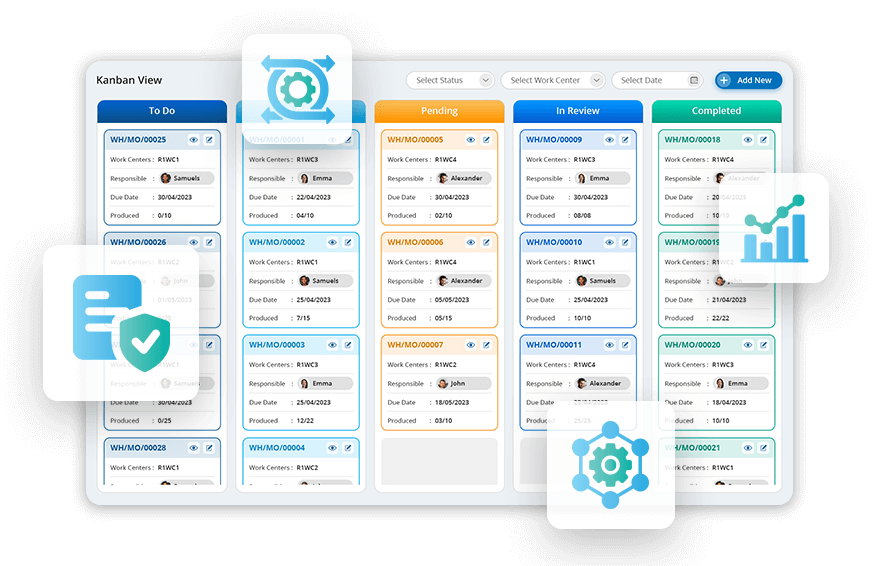
A board is usually divided into columns. Each column represents a workflow stage.
A simple board could contain:
| Stage | Purpose |
| To Do | Tasks waiting to start |
| In Progress | Tasks currently being worked on |
| Review | Tasks waiting for checking |
| Done | Completed tasks |
The number of columns depends on the project.
A personal board may only need three columns. A professional team may need several stages because its workflow has more steps.
The goal is not to create as many columns as possible. The goal is to make the actual workflow easy to understand.
Too many columns can make a board difficult to use. Too few columns can hide important differences between stages.
What Are Keibann Cards?
Cards are the individual units of work on a visual board.
Each card normally represents one task, activity, request, issue, or project item.
A card can include information such as:
- Task name
- Description
- Deadline
- Person responsible
- Priority
- Checklist
- Notes
- Attachments
- Comments
- Labels
- Related tasks
For example, a marketing board might contain cards such as:
- Research blog topic
- Create article outline
- Write first draft
- Review article
- Prepare social media post
- Publish content
The card moves across the board as work progresses.
This simple movement gives the team an immediate visual signal about the current status of each task.
What Are Progress Stages in Keibann?
Progress stages define how work moves through a workflow.
The most common stages are:
- To Do
- In Progress
- Review
- Done
However, workflows can be customized.
For example, a software development workflow might use:
Backlog → Development → Testing → Review → Deployment → Complete
A customer support team might use:
New Request → Assigned → Investigating → Waiting for Customer → Resolved
A student could use:
Planned → Studying → Practice → Review → Completed
The important principle is that each stage should have a clear meaning.
If team members cannot tell when a card should move from one column to another, the workflow may need to be simplified.
Key Benefits of Keibann
A Keibann-style workflow can provide several practical benefits.
Better Task Visibility
The biggest benefit is visibility.
Users can see their workload in one place instead of trying to remember every open task.
This is especially useful for teams where several people are working on different parts of the same project.
Easier Progress Tracking
Cards provide a simple way to track progress.
Moving a card from one stage to another gives the task a visible status.
This can reduce the need for repeated status messages such as “Is this finished?” or “Who is working on this?”
Improved Organization
A board can bring related tasks together.
Instead of keeping project information in scattered notes, messages, and spreadsheets, users can organize work within a consistent structure.
Better Team Communication
Visual boards can help team members understand what others are doing.
For example, if several tasks are already in the In Progress column, the team may realize that too much work has been started at the same time.
Easier Prioritization
Cards can be arranged according to priority.
Important tasks can be placed higher in a column or marked with labels.
This helps users focus on work that matters most.
Support for Continuous Improvement
A visual workflow also makes process problems easier to identify.
If many cards remain stuck in the Review column, for example, the problem may not be the workers. The review process itself may be creating a bottleneck.
This is one of the deeper benefits of visual workflow management.
Keibann and Work in Progress
One important concept in Kanban-style systems is Work in Progress, often called WIP.
WIP means tasks that have started but are not finished.
Imagine a person has ten tasks and starts all ten at once. None of them may be completed quickly because attention is divided between many activities.
A visual workflow can make this problem visible.
A team may decide that only three tasks can be in the In Progress column at one time.
This is known as a WIP limit.
For example:
In Progress: Maximum 3 cards
If three cards are already there, another task should normally wait until one of the existing tasks moves forward.
This encourages people to finish existing work before continuously starting new work.
How to Create a Simple Keibann Board
Creating a basic visual workflow does not require advanced technical knowledge.
Follow these steps.
Step 1: Define the Goal
First decide what the board will manage.
It could be:
- Blog content
- Business projects
- School assignments
- Software tasks
- Customer requests
- Personal goals
- Home projects
A board works best when it has a clear purpose.
Step 2: Identify the Workflow Stages
Think about how a task moves from beginning to completion.
For a basic project, three stages may be enough:
To Do → Doing → Done
If the project includes a review process, use:
To Do → Doing → Review → Done
Step 3: Create Task Cards
Write each task as a separate card.
Avoid putting an entire project into one vague card if it contains many independent activities.
For example, instead of writing:
“Website project”
you could create:
- Choose website structure
- Write homepage content
- Create contact page
- Test mobile layout
- Review SEO settings
This makes progress easier to see.
Step 4: Add Useful Information
Add only information that helps people complete the task.
Useful details may include:
- Deadline
- Owner
- Priority
- Notes
- Checklist
- Reference material
Avoid filling cards with unnecessary information.
Step 5: Move Cards as Work Changes
Cards should move when their actual status changes.
If work has started, move the card into the active stage.
If the work is waiting for approval, move it to Review.
If it is complete, move it to Done.
Step 6: Review the Board Regularly
A board should not become a static list.
Review it regularly and remove completed or outdated work.
A short weekly review can help keep the workflow useful.
Keibann for Personal Productivity
A visual workflow can be useful even without a team.
An individual can create a personal productivity board with:
- Ideas
- To Do
- Today
- Waiting
- Done
For example, a person may place “Schedule dentist appointment” in To Do, move it to Today when ready, and finally place it in Done after the appointment is scheduled.
This approach can reduce mental clutter.
Instead of trying to remember every unfinished task, the person can rely on the board as an external visual system.
Keibann for Project Management
Project managers can use visual workflows to track large amounts of work.
A project board may show:
- Project tasks
- Assigned team members
- Deadlines
- Dependencies
- Review stages
- Completed work
This can make meetings more focused.
Also Read:Urlwo: What It Is, How It Works, Features, Benefits & Safety Guide
Instead of spending the entire meeting asking for individual updates, the team can look at the board and discuss tasks that are blocked, delayed, or approaching deadlines.
However, a visual board should support project management rather than replace good planning.
Complex projects may still require schedules, budgets, documentation, risk management, and formal reporting.
Keibann for Software Development
Visual workflow methods are widely used in software development.
A development board may contain stages such as:
Backlog → Ready → Development → Code Review → Testing → Released
Developers can use cards for:
- New features
- Bugs
- Technical improvements
- Security tasks
- Documentation
- Maintenance
The board helps the team understand how much work is waiting and where work is slowing down.
For example, if many cards are waiting for testing, the testing stage may have become a bottleneck.
A team can then investigate the cause instead of simply adding more tasks.
Keibann for Content Creation
Content teams can also benefit from a visual workflow.
A content board might use:
Ideas → Research → Writing → Editing → SEO Review → Published
Each article can be represented by one card.
The card can include:
- Target keyword
- Search intent
- Content outline
- Writer
- Editor
- Deadline
- Publication date
This makes it easier to manage multiple articles at different stages.
For a website publishing many articles, a content workflow can also help prevent duplicate assignments and missed deadlines.
Keibann for Small Businesses
Small businesses often have many activities happening at the same time.
A visual workflow can help organize:
- Customer orders
- Sales leads
- Marketing campaigns
- Administrative work
- Hiring tasks
- Vendor requests
- Customer support
For example, a sales board could use:
New Lead → Contacted → Qualified → Proposal → Negotiation → Won/Lost
The business can then see how many leads are at each stage.
This may help identify where customers are getting stuck.
Keibann vs. Scrum
Keibann-style visual workflows and Scrum are related to modern project management, but they are not the same thing.
Scrum is a specific framework with defined roles, events, and practices.
Kanban is generally more focused on visualizing work, managing flow, limiting work in progress, and improving the process continuously.
A team does not need to use Scrum to use a visual board.
Some organizations combine ideas from different approaches depending on their needs.
The important thing is to understand what each method is designed to accomplish instead of treating every project-management board as the same system.
Digital Tools for a Keibann Workflow
A visual workflow can be managed with physical cards on a wall or through digital software.
Digital project-management platforms often provide features such as:
- Drag-and-drop cards
- Custom columns
- Due dates
- Team assignments
- Notifications
- File attachments
- Comments
- Checklists
- Automation
- Search
- Reports
The best tool depends on the user’s needs.
A simple personal workflow may not require advanced project-management software.
A large organization may need permissions, audit logs, integrations, reporting, and administrative controls.
Users should choose tools based on workflow requirements rather than simply selecting the platform with the largest number of features.
Common Mistakes When Using Keibann
A visual board can become less useful if it is poorly designed.
One common mistake is creating too many columns.
If a board contains ten or fifteen stages, users may spend more time managing the board than managing the work.
Another problem is creating oversized cards.
A card such as “Complete entire marketing campaign” may contain dozens of activities. It may be better to break the work into smaller tasks.
A third mistake is allowing too much Work in Progress.
Starting many tasks can feel productive, but unfinished work continues to accumulate.
A fourth problem is failing to update the board.
If cards do not reflect reality, the board loses its value.
How to Improve a Keibann Workflow
A good workflow should change when the needs of the users change.
Start with a simple design.
For example:
To Do → In Progress → Done
After using it for several weeks, look for problems.
Ask:
- Where do tasks get stuck?
- Which stage becomes overloaded?
- Are deadlines being missed?
- Are tasks too large?
- Are people starting too much work?
- Does every column have a clear meaning?
Then make small improvements.
This approach is often better than designing a complicated system from the beginning.
Keibann and Digital Privacy
When using a digital workflow platform, privacy should be considered.
Task boards may contain business information, customer details, internal documents, project plans, or personal notes.
Before adding sensitive information, users should understand how the platform handles data.
Important questions include:
- Who can access the board?
- Is the board public or private?
- What permissions are available?
- Are files stored by a third party?
- How long is information retained?
- Can deleted information be recovered?
- Does the service support two-factor authentication?
- Are administrators able to control access?
Users should avoid placing confidential information into an unfamiliar platform simply because it offers a convenient board.
Keibann and Online Safety
If “Keibann” refers to an unfamiliar website, application, or online service rather than a general workflow concept, users should verify the source before creating an account.
A trustworthy service should provide clear information about its company, privacy practices, terms, and security measures.
Be careful with websites that:
- Ask for unnecessary personal information
- Require unusual downloads
- Use misleading login pages
- Make unrealistic promises
- Lack basic contact information
- Redirect users through suspicious pages
- Request sensitive payment information without a clear reason
The name of a service alone does not prove that it is legitimate.
Checking the exact domain, HTTPS connection, privacy policy, and independent reputation information can help users make safer decisions.
Keibann Search Intent and Digital Literacy
The keyword “Keibann” may have different search intent depending on the person using it.
Some people may be looking for:
- A definition
- A workflow method
- A productivity system
- A project-management tool
- A specific website
- A specific application
- Information about Kanban
- A spelling clarification
This makes search intent especially important.
A person should not assume that the first search result is automatically the authoritative meaning of the term.
Instead, compare information from reliable sources and examine context.
If a website describes Keibann as a specific software product, look for official documentation and independent references.
If the term appears in productivity discussions, compare it with established information about Kanban and visual workflow management.
Advantages and Limitations of Keibann
Like any productivity method, a Keibann-style workflow has strengths and weaknesses.
Advantages include:
- Easy visual organization
- Simple progress tracking
- Better work visibility
- Flexible workflow stages
- Useful for individuals and teams
- Easy to understand
- Supports workload management
- Helps identify bottlenecks
Limitations include:
- Boards require regular maintenance
- Large projects may need additional planning tools
- Too many cards can create clutter
- Poorly designed stages can cause confusion
- Visual boards do not automatically solve productivity problems
- Digital platforms may create privacy concerns
The method works best when the board reflects a real workflow rather than becoming another administrative task.
Best Practices for Using Keibann
Several simple practices can make a visual workflow more effective.
Also Read:Louisa Kochansky: Complete Biography, Career, Background & Latest Facts
Keep the Board Simple
Start with only the stages you actually need.
Make Cards Specific
Each card should describe a clear piece of work.
Limit Work in Progress
Avoid starting every task at the same time.
Define Each Stage
Everyone should understand what each column means.
Review Bottlenecks
If tasks regularly stop in one stage, investigate why.
Update the Board
A board that does not reflect current work is not useful.
Remove Completed Work
Archived or completed cards should not overwhelm active work.
Protect Sensitive Information
Use appropriate access controls and avoid unnecessary personal or confidential data.
Frequently Asked Questions About Keibann
1. Is Keibann a software program or a productivity method?
The term Keibann does not have the same widespread recognition as Kanban as a formal productivity or workflow method. In many contexts, it may refer to or be confused with a Kanban-style visual workflow. If you encounter a specific product or website called Keibann, verify its official documentation before assuming that it represents the general workflow concept.
2. Can Keibann be used without a digital application?
Yes. A visual workflow can be created with physical cards and a whiteboard, sticky notes, or paper. Digital software is convenient for remote teams, but it is not required for the basic concept.
3. How many tasks should be in the In Progress column?
There is no universal number. A useful starting point is to limit active tasks based on the team’s actual capacity. A small team may start with a limit of two or three tasks and adjust it after observing how work moves through the system.
4. Can Keibann replace a full project-management system?
Not always. A visual workflow can handle task status and work movement, but complex projects may also need budgeting, scheduling, resource planning, risk management, documentation, reporting, and dependency tracking.
5. What should I do if the Keibann keyword refers to an unfamiliar website?
Check the exact website address, ownership information, privacy policy, security practices, and independent reputation before signing up. Do not provide sensitive information simply because a website uses a familiar-looking productivity term.
Conclusion
Keibann can be understood as a visual workflow approach built around boards, cards, and progress stages. Its central idea is straightforward: make work visible so people can understand what needs to be done, what is currently active, and what has been completed.
The concept is closely related to Kanban, the established visual workflow method. Because “Keibann” is a less common spelling, users should consider the context behind the keyword and avoid assuming that every website or product using the name represents an established methodology.
A simple board with To Do, In Progress, and Done columns can be enough for many beginners. More advanced workflows can include research, review, testing, approval, deployment, or other stages that match the actual process.
The biggest value of a visual workflow is not the board itself. It is the visibility it creates. When work becomes visible, teams can identify bottlenecks, control unfinished tasks, improve communication, and make better decisions.
For digital users, privacy and security are also important. If Keibann refers to a particular website or application, verify the source before creating an account or sharing personal or business information.
Overall, a simple and well-maintained visual workflow can be a practical way to organize work, improve task tracking, and create a clearer path from an unfinished task to a completed result.