Bjudlunch: Meaning, Swedish Lunch Tradition & Etiquette
If you have searched for “bjudlunch,” you may be wondering what this Swedish word means and how it is used.
Bjudlunch generally means an invited or hosted lunch where one person treats another person to the meal. It comes from the Swedish verb “bjuda,” which can mean to invite, offer, or treat someone. In simple English, it is similar to saying, “Lunch is my treat.”
However, bjudlunch is about more than paying for food. It can express friendship, appreciation, hospitality, or professional respect. For Americans, the closest comparison is “Let me take you to lunch.”
This guide explains the meaning of bjudlunch, Swedish lunch culture, etiquette, food ideas, business uses, and practical ways to understand the concept.
What Does Bjudlunch Mean?
Bjudlunch is a Swedish word that can be translated into English as “invited lunch,” “hosted lunch,” or “treat lunch.” Its exact meaning depends somewhat on context, but the central idea is that someone invites another person to lunch and takes responsibility for the meal.
The word is built around “bjuda,” a Swedish verb associated with inviting or treating someone. When a person says that they will “bjuda” someone to lunch, the meaning can include paying for that person’s meal. This makes the financial side of the invitation clearer than a simple statement such as “Would you like to have lunch together?”
That distinction is important.
If two friends simply decide to meet for lunch, both people may expect to pay their own share. If one friend specifically offers a bjudlunch, the invitation normally communicates that the person making the offer is treating the guest.
This makes bjudlunch both a practical and social concept.
The practical part is simple: one person pays.
The social part is more interesting: the person is using a meal to communicate goodwill, appreciation, hospitality, friendship, or professional respect.
Modern discussions of the word also describe bjudlunch in both personal and professional settings rather than limiting it to one particular type of meal.
For an American audience, one of the closest comparisons would be saying, “I’d like to take you to lunch,” rather than simply saying, “Let’s grab lunch.”
The first statement normally suggests that the person making the invitation will pay.
Why Bjudlunch Is More Than Just a Free Lunch
It would be easy to describe bjudlunch simply as “a free lunch.” That description is technically useful in some situations, but it misses much of the meaning.
A free meal focuses on the financial benefit received by the guest.
A bjudlunch focuses more on the gesture.
The host is offering time, attention, food, and hospitality. The money spent on the meal is only one part of the invitation.
This difference can change the way people experience the meal.
Imagine that a colleague helped you complete an important project. Instead of sending a short message saying “Thanks,” you invite the colleague to lunch and tell them you are treating them.
The meal becomes a physical expression of appreciation.
Also Read:Activevitalspark com: What It Is, Safety, Credibility & Health Content
Or imagine that an old friend is visiting your city. You invite that friend to lunch because you have not seen each other for years.
The purpose is not to provide an expensive meal. The purpose is to create time for conversation.
This is one of the most useful ways to understand bjudlunch: the food creates the setting, but the relationship gives the meal its meaning.
Bjudlunch and Swedish Social Culture
Bjudlunch is best understood as part of a broader Swedish approach to social interaction rather than as an isolated rule.
Swedish culture is often associated with values such as equality, moderation, personal space, direct communication, and practical social behavior. These broad cultural characteristics should not be treated as rules that describe every Swedish person, but they can provide useful context when understanding Swedish customs.
A bjudlunch can fit naturally into this environment because it does not require a highly formal celebration.
You do not necessarily need an expensive restaurant, elaborate decorations, or a large guest list.
A simple lunch can be enough.
That simplicity is important.
The strongest version of the idea is not “I am spending a lot of money on you.” Instead, it can be “I want to spend some time with you, and lunch is my treat.”
This helps explain why the concept can work between friends, coworkers, relatives, clients, and other acquaintances.
The setting may change, but the underlying idea remains similar: one person intentionally offers lunch as a gesture of connection or goodwill.
When Do People Have a Bjudlunch?
There is no single occasion required for a bjudlunch.
A person might offer one simply because they want to spend time with someone. Other situations can give the invitation a clearer purpose.
Common examples include:
- Meeting an old friend
- Welcoming a visitor
- Thanking someone
- Celebrating an achievement
- Catching up with a colleague
- Building a professional relationship
- Meeting a client
- Networking
- Discussing a project
- Celebrating a small personal milestone
- Showing appreciation
- Reconnecting with family
This flexibility is one reason the concept is easy for people outside Sweden to understand.
A bjudlunch does not have to be a formal event.
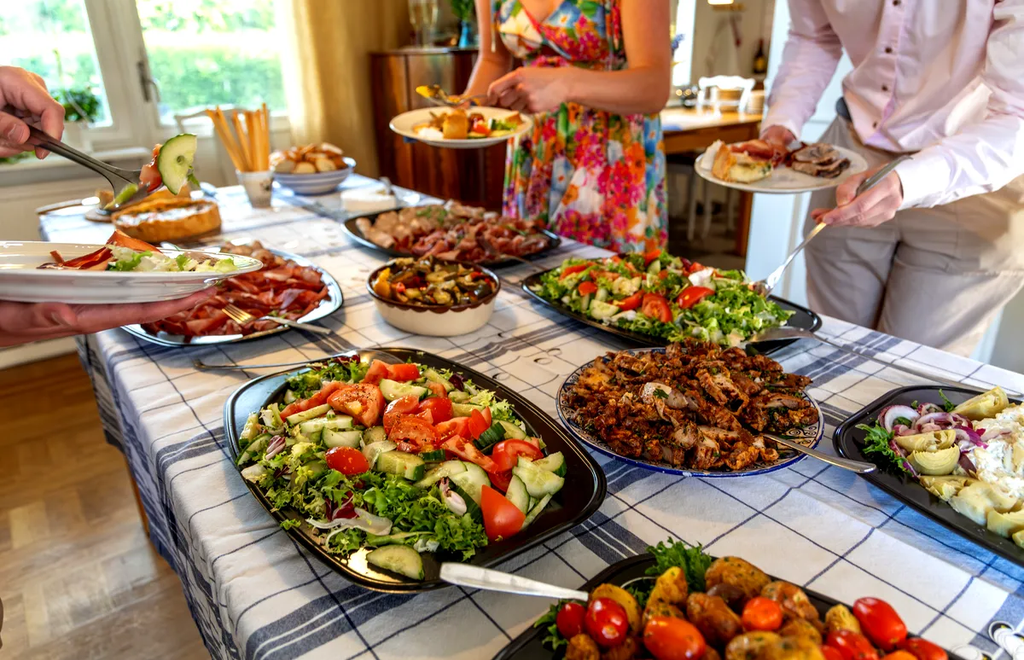
It can be a casual meal at a neighborhood restaurant, a homemade lunch at someone’s home, or a professional lunch between two people.
The intention matters more than the location.
Bjudlunch at Home
A bjudlunch does not have to happen at a restaurant.
Hosting lunch at home can make the experience more personal. The host may prepare a simple meal, invite a few guests, and create a relaxed environment for conversation.
A home-hosted bjudlunch can be especially appropriate for friends and family.
The meal does not need to resemble a formal dinner party. In fact, keeping things simple can make the gathering more comfortable.
A practical home bjudlunch might include:
- Fresh bread
- Salad
- Soup
- Roasted vegetables
- Potatoes
- Fish
- Chicken
- Vegetarian dishes
- Sandwiches
- Fruit
- Coffee
- A simple dessert
The important thing is not culinary complexity.
A host who spends the entire morning preparing ten complicated dishes may have less time and energy to enjoy the guests. A better approach is often to prepare a manageable meal that allows the host to sit down and participate in the conversation.
That is an important lesson that can be applied beyond Swedish culture: hospitality is usually more successful when the host is present rather than constantly working.
Bjudlunch at a Restaurant
Restaurant lunches are another natural setting for bjudlunch.
In this situation, the person extending the invitation normally takes responsibility for the bill when the invitation clearly means that lunch is being provided.
For a casual gathering, the host might choose a restaurant based on convenience, food preferences, and budget.
For a business bjudlunch, the choice may require more planning.
The host should consider:
- Location
- Noise level
- Service speed
- Menu variety
- Dietary requirements
- Price
- Accessibility
- Reservation needs
- Privacy
- Distance from the workplace
The most expensive restaurant is not automatically the best choice.
A restaurant that makes conversation difficult can be a poor choice for a relationship-focused lunch, even if the food is excellent.
Similarly, a very formal restaurant may feel uncomfortable for a casual thank-you lunch.
The best restaurant is usually one that matches the purpose of the invitation.
Who Pays for a Bjudlunch?
Payment is one of the most important parts of understanding bjudlunch.
When someone clearly invites another person and says they are treating them to lunch, the person making the invitation generally pays.
This is different from a simple group lunch where everyone expects to cover their own food.
Clear language helps avoid confusion.
For example, an invitation equivalent to “I’d like to take you to lunch” is different from “Would you like to have lunch together?”
The first makes the host’s intention clearer.
Modern explanations of bjudlunch commonly describe the host as the person who covers the meal, particularly when the invitation explicitly means that the host is treating the guest.
There can still be differences depending on the people involved and the situation. Friends may have their own habits, workplaces may have expense policies, and business meals can be affected by organizational rules.
The safest approach is simple communication.
If you are hosting, make the arrangement clear.
If you are the guest, a polite thank-you is usually appropriate.
Bjudlunch Etiquette for Guests
Being invited to a bjudlunch does not mean you should treat the meal as an unlimited opportunity to order anything.
Good manners still matter.
A thoughtful guest should:
- Arrive on time
- Be respectful of the host’s budget
- Consider dietary needs
- Avoid ordering unnecessarily expensive items
- Participate in conversation
- Say thank you
- Respect the purpose of the meeting
- Avoid making the host uncomfortable about paying
If the host has clearly said they are treating you, repeatedly arguing about the bill can sometimes create more awkwardness rather than less.
A simple “Thank you, I really appreciate lunch” is often enough.
If you want to return the kindness, you can offer to host another meal in the future.
That creates a healthy social exchange without turning the original gesture into a debt.
Bjudlunch Etiquette for Hosts
The host also has responsibilities.
The first is clarity.
If you are paying, say so when you invite the person. This prevents the guest from worrying about how the bill will be divided.
The second is consideration.
Choose a place that suits the guest and the reason for the meeting.
If you know the person is vegetarian, for example, make sure there are suitable options. If the lunch is for business, avoid a restaurant where loud music makes conversation difficult.
The third is moderation.
You do not need to prove generosity through an enormous bill.
A modest but thoughtful lunch can communicate appreciation more effectively than an extravagant meal.
The goal is to make the guest feel welcome, not financially indebted.
Bjudlunch in Swedish Business Culture
One of the most interesting applications of bjudlunch is the workplace.
Business lunches can create an environment where professional relationships develop outside the normal office routine.
A bjudlunch may be used when:
- Meeting a new client
- Welcoming a business partner
- Thanking a colleague
- Discussing a potential project
- Building a professional relationship
- Networking
- Celebrating a team achievement
- Meeting someone from another organization
The meal can make a professional conversation feel less rigid.
Instead of sitting across from someone in a formal conference room, people can talk while sharing food.
This does not mean every business lunch should become casual or that business goals should be ignored.
A good professional bjudlunch still needs a purpose.
If you are meeting a potential client, know what you want to discuss.
If you are thanking a colleague, do not turn the entire meal into another work meeting.
If you are networking, give the other person enough space to talk.
The best business lunch often feels natural even though the host has planned it carefully.
How Bjudlunch Can Build Professional Relationships
A meal can provide something that emails and video calls often cannot: uninterrupted human interaction.
People can learn about each other’s communication styles, interests, goals, and priorities.
This does not mean that a lunch automatically creates trust.
Trust is built through consistent behavior over time.
Also Read:HRMS Globex: Complete Guide to Login, Features, Benefits & HR Portal
However, a well-managed lunch can create a useful opportunity for trust to develop.
The key is to avoid treating the guest as a sales target.
If every question leads back to a product or deal, the invitation may feel transactional.
A better approach is to have a genuine conversation first.
Ask about the person’s work.
Listen carefully.
Share useful information.
Discuss common interests.
Then address business topics naturally.
This is one area where bjudlunch offers a broader lesson: relationships become stronger when people have opportunities to interact as humans rather than only as job titles.
Bjudlunch vs. Swedish Fika
People interested in Swedish culture may confuse bjudlunch with fika.
They are related to Swedish social life, but they are not the same thing.
Fika generally refers to a social coffee break involving coffee or another drink and often something small to eat, such as a pastry.
Bjudlunch is specifically connected to lunch.
The purpose can also differ.
Fika often emphasizes taking a break and spending informal time together.
Bjudlunch is a meal invitation and may involve a stronger hosting or payment element.
Both traditions demonstrate how food and drink can create opportunities for social connection, but they should not be treated as interchangeable terms.
For an American reader, a rough comparison might be:
- Fika: closer to meeting for coffee and a pastry
- Bjudlunch: closer to taking someone out to lunch
The comparison is not perfect, but it makes the difference easier to understand.
What Food Works Well for a Bjudlunch?
There is no single official bjudlunch menu.
This is an important point because online discussions sometimes make Swedish lunch traditions sound more rigid than they really are.
A bjudlunch can include many different foods.
For a home lunch, a practical menu might include soup, bread, salad, and dessert.
For a restaurant lunch, the host may choose a Swedish restaurant, a modern café, or an international restaurant.
Traditional Swedish foods can also be included if the goal is to introduce someone to Swedish cuisine.
Possible choices include:
- Swedish meatballs
- Salmon
- Pickled herring
- Potatoes
- Root vegetables
- Open-faced sandwiches
- Pea soup
- Crispbread
- Vegetarian dishes
- Seasonal vegetables
- Berries
- Simple cakes
The food should match the guest.
If someone has a dietary restriction, traditional food should not be treated as more important than the person’s needs.
A good host adapts.
That principle makes bjudlunch easy to introduce to American audiences because the same concept works with almost any cuisine.
How to Plan a Bjudlunch Step by Step
Hosting a bjudlunch does not need to be complicated.
Start by deciding why you want to invite the person.
Is it a thank-you?
A friendship?
Networking?
A client meeting?
A celebration?
Once the purpose is clear, choose the setting.
A restaurant may be easiest for a business meeting. Home may be better for close friends.
Next, choose a convenient time.
Lunch should not become stressful because everyone has to rush from one appointment to another.
Then select food based on the guest’s preferences.
If you are hosting at home, prepare as much as possible before guests arrive.
If you are going to a restaurant, consider making a reservation when appropriate.
Finally, make the payment arrangement clear.
The entire process can be summarized as:
- Choose the purpose.
- Invite the guest.
- Explain that you are treating them.
- Choose a comfortable location.
- Consider dietary needs.
- Plan a suitable meal.
- Arrive on time.
- Focus on conversation.
- Pay the bill.
- End with a sincere thank-you.
The simplicity of this process is part of what makes the concept useful.
How Americans Can Use the Bjudlunch Idea
Americans do not need to copy Swedish culture exactly to benefit from the idea.
The basic principle is universal.
If you appreciate someone, invite them to lunch.
If a colleague helped you, take them out.
If an old friend is visiting, make time for a meal.
If you are developing a professional relationship, create a relaxed opportunity to talk.
The important part is intentionality.
Modern life can make social interaction feel rushed. People often communicate through short messages, emails, and quick calls.
A lunch forces people to slow down for a little while.
That can have value even when the meal itself is inexpensive.
An American version of bjudlunch might be:
- A sandwich lunch with a coworker
- A café lunch with a friend
- A client lunch at a local restaurant
- A homemade lunch for neighbors
- A thank-you lunch for a mentor
- A casual lunch for a visiting family member
The cuisine does not have to be Swedish.
The principle is what matters.
How to Make a Bjudlunch Comfortable and Meaningful
A successful bjudlunch does not depend on perfect food.
It depends on how the guest feels.
One of the best ways to create a good experience is to remove unnecessary pressure.
Do not make the guest feel that they need to impress you.
Do not make the meal so formal that normal conversation becomes difficult.
Do not spend the entire lunch looking at your phone.
Instead, be present.
Ask questions.
Listen.
Share stories.
If the lunch has a professional purpose, give business topics enough attention without allowing the entire conversation to become a sales pitch.
If it is a social lunch, allow the conversation to move naturally.
This balance is especially important because lunch is a relatively short social window. You may have only an hour, so the quality of attention matters more than the number of activities.
Common Mistakes to Avoid During a Bjudlunch
Even a simple lunch can become uncomfortable if basic expectations are unclear.
One common mistake is failing to explain who is paying.
If the host assumes the guest knows, while the guest assumes everyone is splitting the bill, the check can create unnecessary tension.
Another mistake is choosing a location without considering the purpose.
A loud restaurant may be fine for friends but poor for a serious professional discussion.
A third mistake is overspending.
A bjudlunch is not supposed to become a competition over who can spend the most money.
Another mistake is ignoring dietary preferences.
A thoughtful host asks when necessary rather than making assumptions.
Finally, hosts should avoid making the guest feel obligated to return the favor immediately.
A gift or meal can be generous without becoming a debt.
This is an important part of healthy hospitality.
Also Read:Wifekivers: Meaning, Origin, Uses, Safety, and Online Context
Is Bjudlunch a Formal Swedish Tradition?
It is important not to misunderstand bjudlunch as a strict national ceremony with fixed rules.
It is better understood as a Swedish expression and social practice surrounding an invited or hosted lunch.
There is no universal bjudlunch menu, dress code, number of guests, or required venue.
Different people and situations naturally produce different versions.
A casual lunch between friends can look very different from a business lunch.
A home gathering can look different from a restaurant meeting.
This flexibility is one reason the term is useful.
It describes the nature of the invitation more than a rigid event format.
Some online descriptions emphasize home hosting, while others focus heavily on restaurants and business settings. The broader interpretation is more useful: bjudlunch can refer to different lunch situations as long as the central idea of inviting or treating someone is present.
Frequently Asked Questions About Bjudlunch
Is bjudlunch an official Swedish holiday or festival?
No. Bjudlunch is not a Swedish holiday or festival. It is a Swedish expression associated with inviting or treating someone to lunch. It can happen on an ordinary weekday or during a special social occasion.
Can a bjudlunch include more than two people?
Yes. A bjudlunch can involve two people or a larger group. The number of guests depends on the purpose, location, and host. A small lunch may be appropriate for a personal meeting, while a larger lunch can work for a team or family gathering.
Does a bjudlunch have to include Swedish food?
No. The concept describes the invitation and hosting arrangement rather than a specific menu. You can have a bjudlunch featuring Swedish food, American food, Italian food, Asian food, or almost any other cuisine.
Can a company organize a bjudlunch for employees?
Yes, a company can host a lunch for employees as a gesture of appreciation, team building, or celebration. However, workplace policies, expense rules, and tax requirements can vary, especially in the United States, so businesses should follow their own applicable policies.
Does accepting a bjudlunch mean I must invite the person to lunch later?
No. Accepting a genuine invitation does not automatically create a debt. You can simply thank the person. If you want to return the gesture later, you can do so because you want to, not because the original invitation requires repayment.
Conclusion: Why Bjudlunch Is More Than an Invited Lunch
Bjudlunch is a Swedish term for an invited or hosted lunch where one person treats another to the meal. It comes from the Swedish word “bjuda,” meaning to invite, offer, or treat someone.
However, bjudlunch is about more than simply paying for lunch. It can be a way to show friendship, appreciation, hospitality, or professional respect.
A bjudlunch may take place at home, in a restaurant, between friends, family members, or coworkers. For Americans, the closest expression is “Let me take you to lunch.”
The main idea is simple: sharing a meal creates time for conversation, connection, and appreciation without needing an expensive or formal setting.