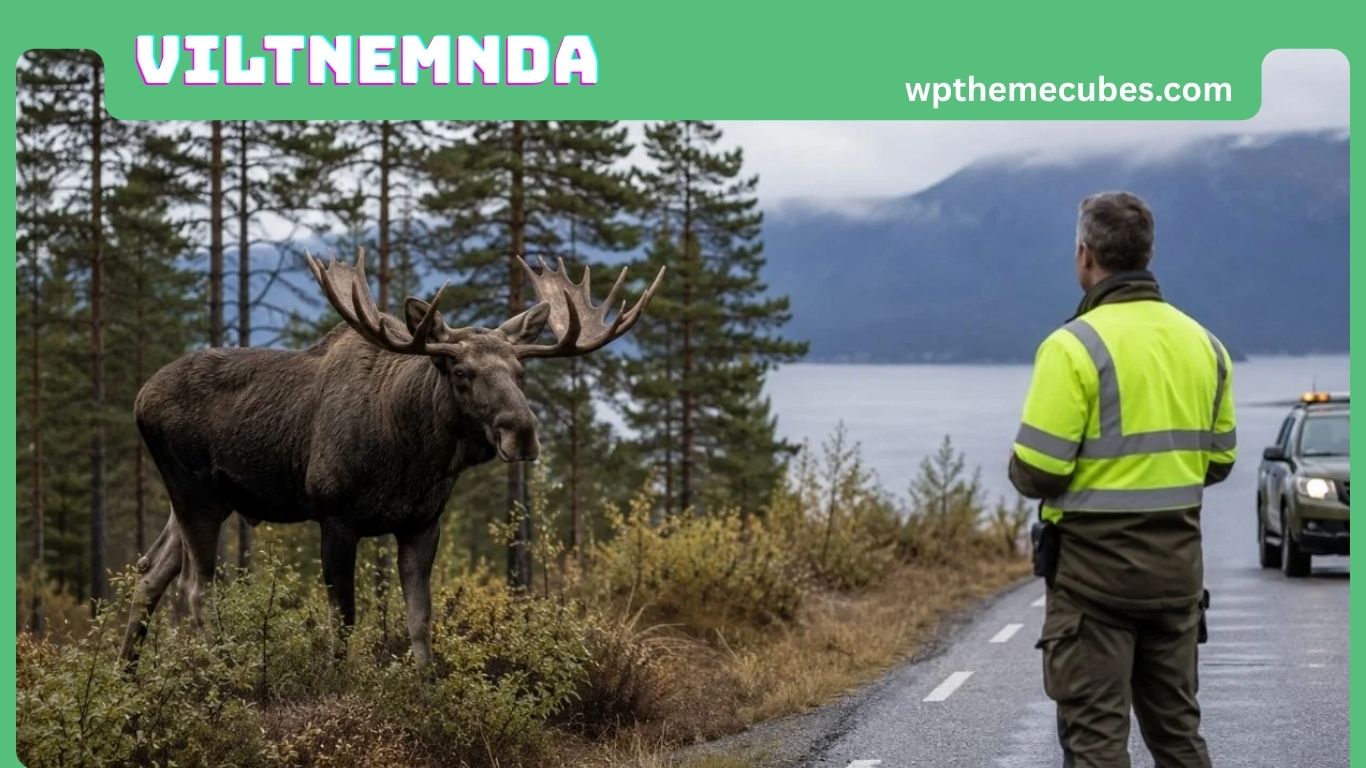
Viltnemnda: Meaning, Role, Wildlife Management & Hunting in Norway
If you have searched for “viltnemnda,” you may be wondering what this Norwegian term means, what the organization does, and how it connects to hunting, wildlife protection, local government, and human-wildlife conflicts.
Viltnemnda generally refers to a municipal wildlife committee in Norway. In simple terms, it is a local public body or committee involved in wildlife management. Its responsibilities can include managing huntable wildlife, dealing with injured or dead animals, supporting wildlife planning, managing a municipal wildlife fund, and carrying out other duties delegated by the municipality.
However, there is an important detail that is easy to miss: viltnemnda is not necessarily a separate committee with exactly the same structure and authority in every Norwegian municipality. Local governments can organize wildlife responsibilities differently and may delegate tasks to a committee, elected body, or municipal administration. Official Norwegian sources describe municipalities and county authorities as wildlife-management authorities, while local arrangements can determine how those responsibilities are carried out.
This distinction is especially important in 2026 because Norway’s wildlife legislation has recently changed. The new Viltressursloven, or Wildlife Resources Act, entered into force on July 1, 2026, replacing the 1981 Viltloven. The new law largely continues existing principles while updating the legal framework for hunting, trapping, wildlife management, and related responsibilities.
Viltnemnda can be understood as part of Norway’s local wildlife-management system. It is not exactly the same as a U.S. state wildlife agency or a county animal-control department. Instead, its work sits within Norway’s broader system of national, regional, and municipal wildlife administration.
What Does Viltnemnda Mean?
The Norwegian word “viltnemnd” literally refers to a wildlife committee or wildlife board. The definite form “viltnemnda” means “the wildlife committee.”
The official Norwegian dictionary defines viltnemnd as a municipal committee that carries out wildlife management.
The basic idea is straightforward. Wildlife does not stop at municipal borders, and human activities such as farming, forestry, roads, construction, and hunting can strongly affect animal populations. Local authorities therefore need a system for making decisions and coordinating practical wildlife management.
Viltnemnda can be part of that local system.
Depending on the municipality, the committee may have responsibility for areas such as:
- Wildlife population management
- Hunting administration
- Deer, moose, and other game management
- Injured and dead wildlife
- Wildlife road accidents
- Municipal wildlife funds
- Hunting statistics
- Wildlife planning
- Local wildlife projects
- Advice to hunters and landowners
- Cooperation with other municipalities
- Certain decisions delegated by the municipal council
The exact responsibilities should always be checked with the relevant municipality because local delegation can differ.
This is one of the most important points when researching viltnemnda: the word describes a type of municipal wildlife-management body, not necessarily one single nationwide organization with identical powers everywhere.
How Viltnemnda Fits Into Norway’s Wildlife Management System
Norway uses several levels of government to manage wildlife.
At the national level, ministries and government agencies establish laws, regulations, national policies, and broader wildlife-management objectives. At the regional level, county authorities and other specialized bodies can have specific responsibilities. At the local level, municipalities deal with many practical wildlife-management matters.
The current system became particularly important after the introduction of the Viltressursloven on July 1, 2026. The new legislation replaced the Viltloven from 1981 and was designed to provide updated legal rules for hunting, trapping, wildlife management, and related activities.
The Norwegian government states that municipalities and county authorities have responsibilities under wildlife legislation and should work toward the purposes of the law while providing advice and guidance on wildlife-management matters.
This means viltnemnda should be viewed as one part of a larger system rather than as an independent wildlife authority above the municipality.
A useful way to understand the structure is:
National government → national wildlife rules and policy
Regional authorities → regional responsibilities and coordination
Municipality → local wildlife management
Viltnemnda or delegated municipal body → practical local wildlife responsibilities
Hunters and landowners → wildlife use and management on the ground
This local approach allows decisions to reflect actual wildlife conditions in individual communities.
Also Read:Bjudlunch: Meaning, Swedish Lunch Tradition & Etiquette
What Does Viltnemnda Do?
The responsibilities of viltnemnda can vary from one municipality to another, but the central purpose is wildlife management.
For example, Hamar municipality describes its viltnemnd as a municipal committee responsible for wildlife-management tasks. Its local wildlife and fish committee includes responsibilities connected with wildlife administration.
Another municipality, Høyanger, explains that its viltnemnd has delegated responsibility for several wildlife-management activities, including fallen wildlife, hunting-related decisions, hunting reports, approval of hunting areas, management plans, and the municipal wildlife fund.
These examples show why the term should not be treated as having one rigid job description.
In practical terms, a viltnemnda may act as a bridge between government rules and local wildlife conditions.
For example, imagine a municipality where the moose population has increased while vehicle collisions are also rising. The local wildlife-management system may need to consider hunting quotas, population data, road safety, landowner concerns, hunter reports, and environmental conditions.
Viltnemnda may help coordinate or make decisions about some of these issues when the municipality has delegated the relevant authority to it.
Viltnemnda and Hunting in Norway
Hunting is one of the most visible areas of Norwegian wildlife management.
Norway has long traditions of hunting, especially hunting species such as moose, deer, and roe deer. But hunting is regulated rather than simply being a private activity between hunters and landowners.
Wildlife management seeks to balance several goals:
- Maintaining healthy animal populations
- Preventing excessive wildlife numbers
- Protecting ecosystems
- Supporting sustainable hunting
- Reducing wildlife-related damage
- Protecting public safety
- Respecting landowner rights
- Maintaining accurate wildlife information
Municipalities can have important responsibilities in this process.
For example, Høyanger states that the municipality sets minimum-area requirements, approves hunting areas, and allocates hunting quotas for certain game-management situations. Its viltnemnd has delegated responsibilities in several of these areas.
This does not mean that every viltnemnda personally issues every hunting permit in Norway.
Instead, authority depends on the applicable law, regulations, and local delegation.
That distinction matters for anyone searching online for “viltnemnda hunting permit” or “viltnemnda hunting rules.”
The correct question is usually not simply, “What does viltnemnda allow?” It is, “Which municipality has authority over this wildlife matter, and what authority has been delegated to its viltnemnd or administration?”
Viltnemnda and Hunting Quotas
One of the most important concepts in Norwegian game management is the hunting quota.
A quota determines how many animals of a particular type may be legally harvested under a specific management arrangement.
For large game such as moose and deer, quotas are connected with population management. The goal is not simply to maximize the number of animals hunted. Instead, authorities consider the size and condition of wildlife populations and the objectives established for the area.
A municipality may therefore need information about:
- Animal population estimates
- Hunting results
- Age and sex distribution
- Reproduction
- Wildlife observations
- Road collisions
- Agricultural damage
- Forestry impacts
- Local management plans
This is where local wildlife data becomes valuable.
A good wildlife-management decision should ideally be based on more than individual opinions. Hunters may see many animals in one area, while farmers may experience serious crop damage in another. Scientific monitoring and long-term records can help authorities understand the larger picture.
Viltnemnda can contribute to this local decision-making process where the municipality has assigned it the relevant responsibilities.
Viltnemnda and Moose, Deer, and Other Wildlife
Norwegian wildlife management often gives significant attention to large game animals.
Moose, deer, and roe deer can provide important recreational, cultural, and economic benefits. At the same time, large wildlife populations can create problems.
These problems can include:
- Vehicle collisions
- Crop damage
- Forest damage
- Traffic safety concerns
- Animal welfare issues
- Pressure on vegetation
- Conflicts between landowners and hunters
For this reason, local wildlife management is not simply about protecting animals or allowing hunting.
It is about finding a sustainable balance.
For example, if a municipality has too many deer, simply increasing hunting may not automatically solve every problem. The municipality may also need to examine habitat, road crossings, feeding patterns, land use, and population distribution.
This broader approach is one reason local wildlife committees can be useful.
They can bring together information that comes from hunters, landowners, residents, municipal employees, and wildlife-management authorities.
Viltnemnda and Injured or Dead Wildlife
Another important area associated with viltnemnda is fallvilt and ettersøk.
Fallvilt generally refers to wildlife that is found dead or that has died outside ordinary hunting circumstances. Ettersøk means searching for an injured animal, especially after an animal has been hit or wounded.
This can become especially important after vehicle collisions.
A moose, deer, or other large animal may be hit by a car but survive the initial collision. The animal may then move away from the road while suffering serious injuries.
In such situations, simply leaving the animal is not an acceptable wildlife-management solution.
Municipal authorities can have responsibilities for dealing with injured or dead wildlife, and local arrangements may assign practical work to wildlife committees or fallvilt teams.
Høyanger, for example, lists fallvilt involving animals that are hit, injured, or sick among the responsibilities connected with its local wildlife-management system.
The importance of this work goes beyond animal welfare.
An injured large animal near a road can also create another collision risk. Quick reporting and organized response can therefore protect both wildlife and people.
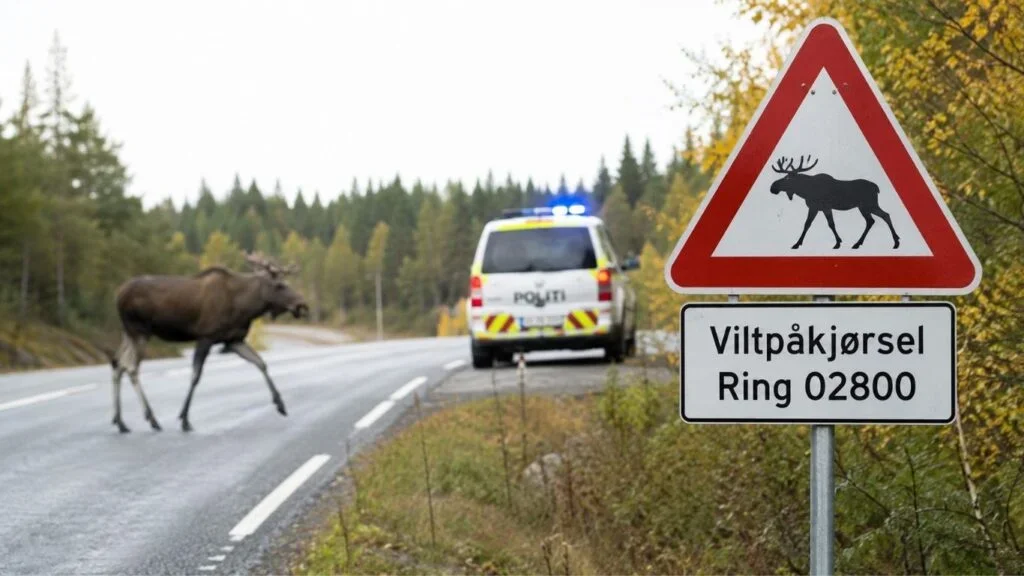
Viltnemnda and Wildlife Road Accidents
Wildlife-vehicle collisions are one of the clearest examples of why local wildlife management matters.
Large animals such as moose and deer can cause severe damage when they collide with vehicles. These accidents can injure animals, drivers, and passengers.
A municipality may therefore use wildlife information to identify areas where collisions occur frequently.
Possible local responses can include:
- Warning signs
- Vegetation management
- Wildlife crossings
- Fencing
- Seasonal awareness campaigns
- Monitoring wildlife movement
- Emergency response arrangements
- Measures designed to keep animals away from dangerous roads
Norwegian government materials also recognize municipal responsibilities involving urgent measures to prevent large-game collisions. Recent legislation discusses measures such as preparing routes or using food to draw animals away from roads or railways when necessary to address collision risks.
This demonstrates an important point: wildlife management is also a public-safety issue.
Also Read:Activevitalspark com: What It Is, Safety, Credibility & Health Content
Viltnemnda and the Municipal Wildlife Fund
The municipal wildlife fund, known in Norwegian as the kommunale viltfond, is another important part of local wildlife management.
The fund can support wildlife-related activities and projects. Norwegian government documents explain that hunting and harvesting fees can contribute to wildlife funds, while municipal harvesting fees can go into municipal wildlife funds.
The purpose is to support wildlife-management activities rather than simply becoming ordinary municipal revenue.
Depending on local rules, funds may support activities such as:
- Wildlife surveys
- Population monitoring
- Wildlife-management projects
- Measures that reduce wildlife damage
- Hunting-related information
- Local research
- Cooperation projects
- Wildlife habitat work
- Practical wildlife-management activities
The exact rules for using a municipal wildlife fund depend on applicable regulations and local decisions.
Some municipalities specifically delegate management of the fund to their viltnemnd. For example, Vegårshei’s administrative rules state that its viltnemnd has authority for managing the municipal wildlife fund and conducting fallvilt work.
This is another example of why local delegation matters.
Viltnemnda and Wildlife Data
Modern wildlife management depends heavily on information.
A committee cannot effectively manage wildlife populations if it does not know what is happening in the local environment.
Useful information can include:
- Number of animals observed
- Number of animals harvested
- Age of harvested animals
- Sex ratios
- Reproductive information
- Road-kill statistics
- Animal health information
- Habitat conditions
- Reports from hunters
- Reports from landowners
- Historical population trends
Norway also uses national wildlife data systems. Government budget documents for 2026 highlight continued development and use of the Hjorteviltregisteret, a national database for deer and other large-game information that is useful to municipalities and other users.
This creates an important connection between local and national wildlife management.
A local observation may appear small, but thousands of observations and hunting records can reveal larger population trends.
Why Viltnemnda Is Important for Local Communities
The importance of viltnemnda becomes clearer when wildlife affects everyday life.
A person living in a rural Norwegian community may encounter wildlife while driving, farming, hiking, hunting, or managing a forest property.
The same animal can have different meanings for different people.
A hunter may see a healthy deer population as a valuable hunting resource.
A farmer may see the same population as a source of crop damage.
A driver may see deer near a road as a safety concern.
A conservationist may focus on habitat quality and biodiversity.
A municipality has to consider all these perspectives.
This makes wildlife management a balancing exercise.
A strong local wildlife system should therefore be based on evidence, clear rules, transparency, and communication.
Viltnemnda can help provide that local connection when it has been established or delegated by the municipality.
Is Viltnemnda the Same in Every Norwegian Municipality?
No.
This is one of the most important facts to understand.
There is no reason to assume that every Norwegian municipality organizes its wildlife responsibilities in exactly the same way.
Some municipalities have a dedicated viltnemnd.
Some use a combined wildlife and fish committee.
Some may place responsibilities within another political committee.
Others may delegate practical responsibilities to municipal employees or administrative departments.
The Norwegian public-sector service taxonomy also recognizes that wildlife management is generally carried out by municipalities or counties through viltnemnder or delegated decisions.
This flexible structure makes sense because Norwegian municipalities vary greatly.
A small rural municipality with large moose populations may need a very different structure from a densely populated municipality with limited hunting activity.
Local government can therefore organize responsibilities according to local conditions while still operating within national law.
How Viltnemnda Differs From Other Norwegian Wildlife Authorities
Viltnemnda can easily be confused with other Norwegian wildlife bodies.
One important distinction is between a local viltnemnd and a regional rovviltnemnd.
Regional rovviltnemnder are responsible for the management of large carnivores such as lynx, wolverine, wolf, and bear within defined regions. Norway has eight regional carnivore-management committees.
These are not the same as municipal viltnemnder.
There are also villreinnemnder, which have responsibilities connected with wild reindeer management.
Therefore, the word “nemnd” does not automatically mean the same type of organization.
A simple distinction is:
Viltnemnd = local or municipal wildlife-management committee
Rovviltnemnd = regional carnivore-management committee
Villreinnemnd = committee connected with wild reindeer management
Municipal wildlife administration = broader local governmental responsibility that may or may not be organized through a separate viltnemnd
Understanding these differences prevents many common misunderstandings.
How Hunters and Landowners Interact With Viltnemnda
Hunters and landowners can be directly affected by local wildlife-management decisions.
Landowners often have important rights and responsibilities concerning hunting areas and wildlife management. Hunters must follow national and local hunting rules, including applicable quotas, seasons, reporting requirements, and other conditions.
Depending on the municipality, viltnemnda may be involved in matters such as:
- Approval of hunting areas
- Hunting quotas
- Management plans
- Harvest reporting
- Wildlife statistics
- Local hunting information
- Wildlife funds
- Injured wildlife
- Population-management projects
Høyanger’s municipal information provides a useful real-world example of these responsibilities, listing approval of hunting areas, management plans, harvest reports, and certain hunting permits among local wildlife-management tasks.
However, hunters should not assume that an informal conversation with a committee member changes a legal requirement.
Official decisions and applicable regulations are what matter.
This is especially important when dealing with hunting quotas, illegal harvesting, appeals, or other legal matters.
What Happens When There Is a Dispute About a Wildlife Decision?
Wildlife decisions made by public authorities can sometimes affect individual rights or interests.
For example, a hunter might disagree with a decision involving a harvested animal, a quota, or another municipal wildlife matter.
Norwegian administrative law provides mechanisms for reviewing certain decisions.
Government legislative materials explain that decisions made by municipalities under wildlife legislation can be subject to appeal, with the Statsforvalteren serving as the appeal body for individual decisions under the relevant framework.
A recent statement from Norway’s Parliamentary Ombudsman also demonstrates why proper administrative procedure matters. In one case involving a municipal viltnemnd decision about an illegally harvested moose, the Ombudsman concluded that the municipality needed to reconsider the matter because the applicable administrative-law procedures had not been properly followed.
This is an important lesson.
Also Read:HRMS Globex: Complete Guide to Login, Features, Benefits & HR Portal
A viltnemnd is not simply a hunting club or informal local group when it exercises delegated public authority.
When it makes formal administrative decisions, legal procedures can apply.
Final Thoughts on Viltnemnda
Viltnemnda is an important term for understanding wildlife management in Norway.
At its simplest, it means a municipal wildlife committee. But the practical role can be much broader. Depending on local organization and delegated authority, a viltnemnd may be involved in hunting administration, wildlife population management, injured and dead animals, road-collision issues, wildlife funds, management plans, hunting data, and other local wildlife matters.
The key point is that viltnemnda should not be viewed as one identical organization operating in every municipality.
Norway’s municipalities have wildlife-management responsibilities, but they can organize and delegate those responsibilities in different ways.
The topic is also especially relevant in 2026 because Norway’s new Viltressursloven took effect on July 1, 2026, replacing the Viltloven of 1981.
For anyone researching viltnemnda, the best approach is therefore to combine the general meaning of the term with the specific rules of the municipality involved.
The simplest takeaway is this: viltnemnda is part of Norway’s local wildlife-management system, helping connect national wildlife policy with the practical realities of animals, hunting, land use, roads, and communities.
FAQs About Viltnemnda
Is viltnemnda a government organization?
Yes, when it operates as a municipal wildlife committee, viltnemnda is part of the local public wildlife-management structure. However, the exact organizational form and delegated authority can differ between municipalities.
Does viltnemnda exist in every municipality in Norway?
Not necessarily as a separate committee with that exact name. Municipal wildlife responsibilities can be organized through a viltnemnd, another committee, or delegated municipal administration.
Is viltnemnda responsible for wolves and bears?
Not generally in the same way as the regional rovviltnemnder. Norway has eight regional rovviltnemnder with major responsibilities for lynx, wolverine, wolf, and bear management in their regions.
Can viltnemnda make legally binding decisions?
A viltnemnd can make formal decisions when the municipality has delegated the relevant authority to it. Such decisions may be subject to administrative-law requirements and, in applicable cases, appeal procedures.
Has the role of viltnemnda changed in 2026?
The broader legal framework changed significantly on July 1, 2026, when Viltressursloven replaced the Viltloven of 1981. The new law largely continues existing principles while updating the framework for wildlife management, hunting, trapping, and related activities.