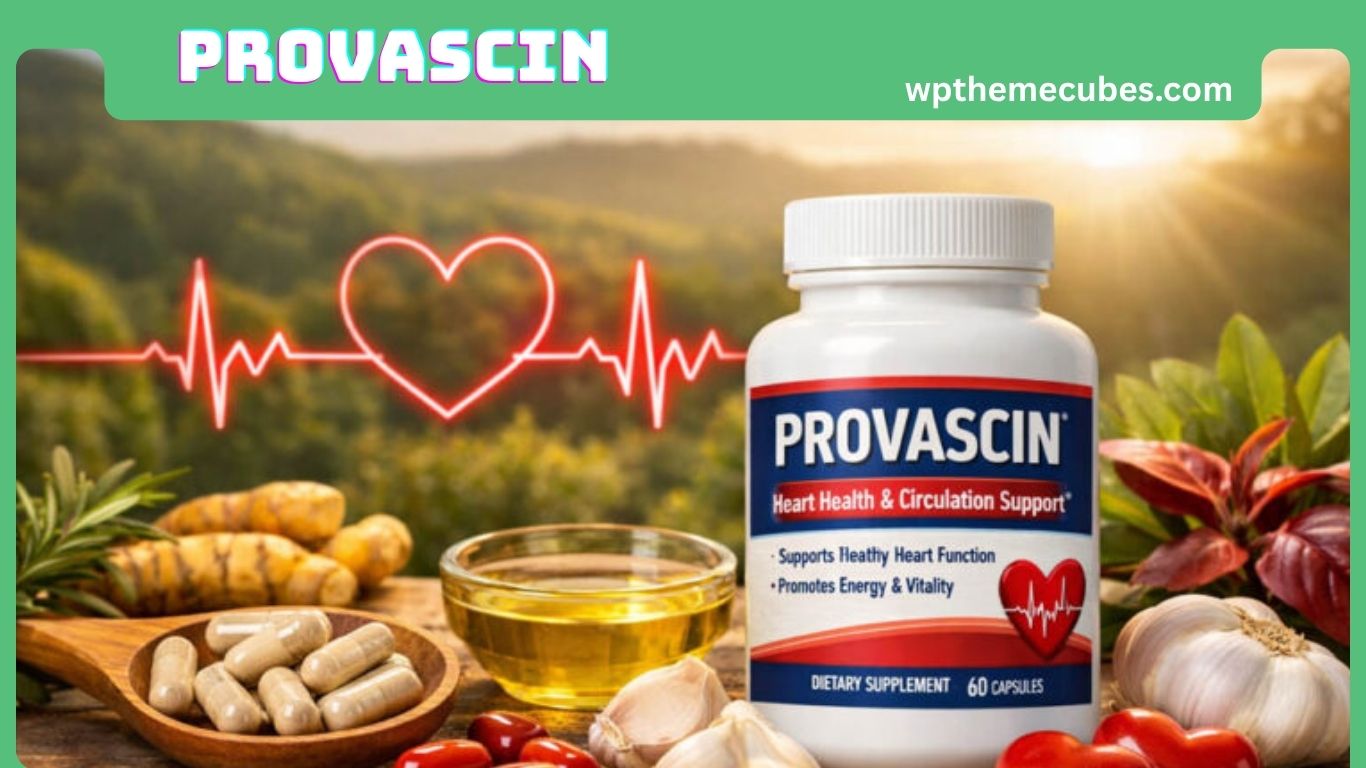
Provascin: Ingredients, Cardiovascular Support, and Safety
Provascin is a name associated with a multi-ingredient dietary supplement marketed around cardiovascular, circulation, antioxidant, and metabolic support. The product has attracted attention from people who are interested in natural approaches to maintaining heart and circulatory health.
The Provascin name can be confusing because information available online is not always consistent. Different websites may show older product information, different descriptions, or availability details. For this reason, anyone researching Provascin should focus on the current product label, manufacturer information, ingredient amounts, and safety instructions.
The best-known Provascin formula has been associated with Purica and includes ingredients such as L-carnitine, alpha-ketoglutaric acid, Chaga mushroom, Coenzyme Q10, betaine hydrochloride, alpha-lipoic acid, grape seed extract, and green tea extract.
It is important to understand that Provascin is a supplement, not a replacement for professional medical care. Individual ingredients may have scientific research behind them, but that does not automatically prove that the complete Provascin formula can prevent or treat cardiovascular disease.
This guide explains Provascin in simple terms, including its ingredients, potential uses, safety considerations, circulation and cholesterol claims, and practical tips for evaluating the product.
What Is Provascin?
Provascin is generally described as a multi-ingredient dietary supplement designed to support cardiovascular and circulatory wellness.
Rather than containing only one vitamin, mineral, or herbal ingredient, the formula combines several different compounds. These ingredients are associated with areas such as cellular energy production, antioxidant activity, and metabolic function.
The reported Provascin formula has included:
- L-carnitine
- Alpha-ketoglutaric acid
- Chaga mushroom
- Coenzyme Q10
- Betaine hydrochloride
- Alpha-lipoic acid
- Grape seed extract
- Green tea extract
The product has been marketed toward people interested in general cardiovascular and circulatory support.
However, there is an important difference between supporting normal body functions and treating a medical condition.
For example, CoQ10 participates in cellular energy production. That is a biological fact. It does not automatically mean that a supplement containing CoQ10 can treat heart failure or prevent a heart attack.
The same principle applies to the other Provascin ingredients.
For consumers, the most useful way to understand the product is to examine each ingredient, its known function, the evidence behind it, and the possible safety concerns.
How Does Provascin Work?
Provascin appears to use a multi-ingredient approach rather than relying on one specific mechanism.
The reported ingredients can broadly be grouped into several areas:
- Cellular energy metabolism
- Antioxidant activity
- Nutritional support
- Metabolic health
- Cardiovascular wellness
- Circulatory support
L-carnitine and CoQ10, for example, are connected with cellular energy production. This is relevant to tissues that require substantial energy, including the heart.
Other ingredients, including grape seed extract, alpha-lipoic acid, green tea extract, and Chaga, contain compounds that have antioxidant properties.
This may explain why the formula is marketed around cardiovascular and cellular wellness.
However, a biological mechanism should not be confused with proof of a clinical benefit.
A supplement can influence a biological pathway without being proven to prevent disease.
For example, antioxidant activity in a laboratory does not automatically mean that a supplement prevents heart attacks in humans.
The same applies to ingredients connected with cholesterol, glucose, circulation, or energy metabolism.
A realistic way to look at Provascin is:
Also Read:Keibann: Complete Guide to Visual Workflow and Task Management
- It contains several biologically active ingredients.
- Some of those ingredients have been studied individually.
- The evidence for each ingredient varies.
- Evidence for the complete formula may be more limited.
- It should not be considered a replacement for prescribed cardiovascular treatment.
This distinction is important when evaluating health supplements online.
Provascin Ingredients and Formula
Available product information for the Purica Provascin formula has listed eight primary ingredients per capsule.
Reported amounts include:
| Ingredient | Reported amount per capsule |
| L-Carnitine | 188 mg |
| Alpha-ketoglutaric acid | 125 mg |
| Certified organic micronized Chaga | 125 mg |
| Coenzyme Q10 | 38 mg |
| Betaine hydrochloride | 31 mg |
| DL-alpha-lipoic acid | 13 mg |
| Grape seed extract | 9 mg |
| Green tea extract | 9 mg |
Other reported ingredients include magnesium stearate, microcrystalline cellulose, and hypromellose.
Because supplement formulations can change, consumers should always compare older online information with the current product label.
The ingredient list is important for several reasons.
First, it tells you exactly what you are consuming.
Second, it helps identify ingredients that may already be present in other supplements.
Third, it gives a doctor or pharmacist the information needed to check for potential interactions.
For example, someone taking a separate CoQ10 supplement should consider the total amount of CoQ10 they receive from all products.
The same principle applies to botanical extracts and other active compounds.
L-Carnitine in Provascin
L-carnitine is one of the most recognizable ingredients in Provascin.
The body naturally produces L-carnitine, and it is also obtained through food. It plays a role in transporting certain fatty acids into mitochondria, where they can participate in energy production.
This function explains why L-carnitine is often included in products associated with:
- Energy metabolism
- Exercise support
- Muscle function
- Cardiovascular nutrition
- Physical performance
The heart has a high energy requirement because it works continuously.
However, the presence of L-carnitine in Provascin does not prove that the supplement improves heart performance.
Research involving L-carnitine has produced different findings depending on the health condition, population, dose, and study design.
This is why it is better to say that L-carnitine has a role in normal energy metabolism rather than claiming that it guarantees a cardiovascular benefit.
People should also consider their total intake if they use multiple supplements.
A healthcare professional can help determine whether additional L-carnitine is appropriate for an individual’s circumstances.
CoQ10 and Provascin
Coenzyme Q10, commonly called CoQ10, is another important Provascin ingredient.
CoQ10 occurs naturally in the body and participates in mitochondrial energy production.
Mitochondria are often described as the energy-producing structures inside cells. Since the heart requires substantial energy, CoQ10 has attracted interest in cardiovascular research.
CoQ10 supplements are widely available on their own as well as in combination products such as Provascin.
Potential areas of research include:
- Cellular energy production
- Oxidative stress
- Cardiovascular function
- Muscle health
- General energy metabolism
However, research on CoQ10 should not automatically be treated as proof that Provascin works for cardiovascular disease.
There is a major difference between:
- Research on CoQ10 itself
- Research on a particular CoQ10 dose
- Research on a specific medical condition
- Clinical trials of the complete Provascin formula
These are not interchangeable.
The reported Provascin formula contains 38 mg of CoQ10 per capsule, but the amount used in a particular scientific study may be different.
Therefore, consumers should avoid assuming that the results of a study using another dose or another product directly apply to Provascin.
Chaga Mushroom in Provascin
Chaga mushroom is another component of the reported Provascin formula.
Chaga is a mushroom that has received attention because it contains various compounds with antioxidant properties.
Antioxidants are substances that interact with molecules involved in oxidative processes. Oxidative stress is an important research area because excessive oxidative damage can affect cells and tissues.
This explains why Chaga may be included in a formula focused on general wellness.
However, consumers should avoid turning antioxidant claims into medical promises.
Chaga being associated with antioxidant activity does not prove that it can:
- Remove artery plaque
- Cure heart disease
- Prevent heart attacks
- Replace prescription medicine
- Restore damaged blood vessels
Chaga is also not automatically safe for every person simply because it is a mushroom.
People who take prescription medicines or have chronic medical conditions should discuss Chaga-containing supplements with a healthcare professional.
The source and quality of the mushroom ingredient are also important.
Consumers should check the current label for information about:
- Ingredient identity
- Amount
- Source
- Serving size
- Manufacturing information
- Warning statements
Other Provascin Ingredients
Provascin contains several other ingredients that contribute to its multi-ingredient design.
Alpha-Ketoglutaric Acid
Alpha-ketoglutaric acid is naturally involved in cellular metabolism.
It participates in the citric acid cycle, an important metabolic pathway involved in cellular energy production.
Its inclusion in Provascin fits the formula’s broader focus on energy and metabolic support.
However, normal participation in metabolism does not prove that taking alpha-ketoglutaric acid as a supplement prevents cardiovascular disease.
Betaine Hydrochloride
Betaine-related compounds are involved in several metabolic processes, including methylation.
Betaine is also associated with homocysteine metabolism.
Homocysteine has been studied in relation to cardiovascular health, but changes in a biomarker do not automatically translate into lower cardiovascular risk.
This is an important point when evaluating supplement marketing.
Alpha-Lipoic Acid
Alpha-lipoic acid is involved in energy metabolism and has antioxidant properties.
It has been researched in several health areas, including metabolic and neurological conditions.
The reported Provascin formula contains DL-alpha-lipoic acid.
People who take diabetes medication should discuss alpha-lipoic acid-containing supplements with a healthcare professional because glucose metabolism may be relevant to their treatment.
Grape Seed Extract
Grape seed extract contains polyphenolic compounds with antioxidant properties.
It has been studied for possible cardiovascular and metabolic effects.
However, research on grape seed extract does not establish Provascin as a treatment for blocked arteries, hypertension, or other cardiovascular diseases.
Green Tea Extract
Green tea extract contains plant compounds called catechins.
Green tea has been widely studied for metabolic and antioxidant properties.
However, concentrated green tea extract is different from drinking ordinary green tea.
Concentrated extracts may contain higher levels of certain compounds and can have different safety considerations.
People with liver conditions should be especially careful with concentrated botanical extracts and should discuss them with a healthcare professional.
Provascin Benefits for Cardiovascular Health
Provascin is mainly marketed around cardiovascular and circulatory support.
The formula’s potential areas of interest include:
- General cardiovascular wellness
- Cellular energy support
- Antioxidant support
- Metabolic wellness
- Circulatory health
- Healthy aging support
These should be understood as areas of nutritional interest rather than guaranteed medical benefits.
The strongest cardiovascular benefits usually come from proven lifestyle and medical approaches.
Important heart-health habits include:
- Eating a balanced diet
- Getting regular physical activity
- Avoiding tobacco
- Maintaining a healthy weight
- Monitoring blood pressure
- Monitoring cholesterol
- Managing blood glucose when needed
- Getting adequate sleep
- Following medical advice
A supplement cannot compensate for major untreated cardiovascular risk factors.
Also Read:Hochre: Complete Guide to the AI Content Writing Assistant
For example, someone with very high LDL cholesterol should not assume that taking Provascin eliminates the need to discuss cholesterol treatment with a doctor.
Likewise, a person with diagnosed heart disease should continue following the treatment plan recommended by their healthcare team.
The role of a supplement, if appropriate, should be considered alongside—not instead of—evidence-based care.
Provascin and Blood Circulation
Blood circulation is another major reason people may search for Provascin.
The circulatory system includes the heart, arteries, veins, and smaller blood vessels. Healthy circulation depends on many different factors.
People sometimes use the phrase “poor circulation” to describe symptoms such as:
- Cold hands or feet
- Tired legs
- Leg heaviness
- Swelling
- Tingling
- Discomfort during activity
However, these symptoms can have many different causes.
For example, leg swelling may be related to vascular conditions, heart problems, kidney conditions, medication effects, or other health issues.
That means a circulation supplement should not be used as a way to diagnose the cause of a symptom.
Some older Provascin product descriptions have connected the product with circulation-related concerns, including chronic venous insufficiency.
Chronic venous insufficiency is a medical condition and should be evaluated by a healthcare professional.
People should seek medical attention for serious or sudden symptoms such as:
- Sudden chest pain
- Severe shortness of breath
- Fainting
- Sudden one-sided leg swelling
- Severe unexplained leg pain
- Sudden weakness
- New neurological symptoms
These symptoms may require urgent evaluation and should not be treated by trying a supplement at home.
Provascin and Cholesterol
Cholesterol is one of the most important factors in cardiovascular health.
In particular, high LDL cholesterol can contribute to plaque buildup in arteries and increase cardiovascular risk.
Because several Provascin ingredients have been studied in metabolic and cardiovascular contexts, consumers may wonder whether Provascin can lower cholesterol.
The evidence should be interpreted carefully.
A supplement containing ingredients associated with healthy metabolism is not automatically a proven cholesterol-lowering treatment.
If you are concerned about cholesterol, a blood test can provide useful information about:
- LDL cholesterol
- HDL cholesterol
- Triglycerides
- Total cholesterol
Treatment depends on the individual’s overall cardiovascular risk.
Some people may benefit primarily from lifestyle changes, while others may require prescription medication.
People should not stop a prescribed statin or other cholesterol medication simply because they want to try Provascin.
If you want to combine the supplement with cholesterol treatment, discuss the complete ingredient list with your doctor or pharmacist.
This is especially important if you take several medicines.
Provascin and Blood Pressure
Blood pressure is another major part of cardiovascular health.
High blood pressure may not cause obvious symptoms, which is why regular measurement is important.
Some ingredients in nutritional supplements have been studied for possible effects on blood pressure, but this does not establish Provascin as a treatment for hypertension.
People taking blood-pressure medicine should be particularly careful when adding a multi-ingredient supplement.
The reported Provascin product information includes a warning for people taking blood-pressure medication.
A responsible approach includes:
- Measuring blood pressure regularly
- Following the prescribed treatment plan
- Discussing supplements with a healthcare professional
- Avoiding self-adjustment of prescription medicine
- Maintaining a heart-healthy diet
- Staying physically active when medically appropriate
If blood pressure is consistently high, medical evaluation is more useful than relying on how you feel.
A person can have significantly elevated blood pressure without noticing any symptoms.
Provascin Safety, Side Effects, and Warnings
Provascin contains several active ingredients, so safety deserves careful attention.
Natural ingredients can have biological effects and can interact with medicines.
The reported product information recommends professional advice for people with certain medical conditions or medication use.
Extra caution may be appropriate if you:
- Have liver disease
- Have kidney disease
- Have diabetes
- Have a seizure disorder
- Have an autoimmune condition
- Take blood thinners
- Take blood-pressure medicine
- Take immunosuppressive medication
- Are pregnant
- Are breastfeeding
Concentrated botanical ingredients also deserve attention.
For example, green tea extract is different from ordinary brewed green tea and can have different safety considerations.
People with liver problems should discuss supplements containing concentrated botanical extracts with their healthcare professional.
It is also important to monitor how your body responds.
If you develop an unusual or serious reaction after starting a supplement, stop using it and seek appropriate medical advice.
Do not assume that a reaction is harmless simply because the product is labeled natural.
Provascin Drug Interactions
Drug interactions are one of the most important reasons to speak with a pharmacist or doctor before using Provascin.
A multi-ingredient formula can be more complicated to evaluate than a single-ingredient supplement.
Potential areas of concern include:
- Blood-thinning medication
- Blood-pressure medication
- Diabetes medication
- Immunosuppressive medication
- Medicines affected by liver metabolism
- Other supplements with overlapping ingredients
People taking several prescription medications should be especially cautious.
Before using Provascin, make a complete list of everything you take, including:
- Prescription drugs
- Over-the-counter medicines
- Vitamins
- Minerals
- Herbal supplements
- Sports supplements
- Other natural health products
Give the list to your doctor or pharmacist.
It is better to provide the actual Provascin Supplement Facts label than simply saying you are taking a “heart supplement.”
The exact ingredients and amounts help healthcare professionals evaluate potential interactions.
You should also tell your healthcare team about supplement use before surgery or other medical procedures.
Is Provascin FDA Approved and Safe?
Provascin should not be described as an FDA-approved treatment for cardiovascular disease.
In the United States, dietary supplements are regulated differently from prescription medicines.
The FDA does not approve dietary supplements for safety and effectiveness before they are marketed in the same way it approves prescription drugs.
This means consumers should be cautious if an advertisement claims that Provascin has been “FDA approved” to treat heart disease, high blood pressure, blocked arteries, or high cholesterol.
The word “FDA” can appear in misleading advertisements even when a product has not received FDA approval for a medical use.
Consumers should also understand that safety can vary from one person to another.
A product may be tolerated by one person but unsuitable for another because of:
- Medical conditions
- Prescription medicines
- Allergies
- Age
- Other supplements
- Pregnancy or breastfeeding
- Individual sensitivity
For this reason, safety should always be considered in context.
The current label, manufacturer information, and professional medical advice are more useful than general online claims.
How to Use and Evaluate Provascin
The first step is to check the current product label.
Do not depend entirely on an old article, social media post, marketplace listing, or customer review.
Before using Provascin, check:
- Product name
- Manufacturer
- Serving size
- Ingredient amounts
- Directions
- Warning statements
- Expiration date
- Lot or batch information
- Storage instructions
Follow the current package directions.
Also Read:Urlwo: What It Is, How It Works, Features, Benefits & Safety Guide
Do not assume that taking a larger amount will produce better results.
Taking several supplements at the same time can also create unintended overlap.
For example, a person could take Provascin together with separate products containing:
- CoQ10
- Green tea extract
- Alpha-lipoic acid
- Antioxidants
- Energy ingredients
- Herbal extracts
This can increase total exposure to certain ingredients.
Online reviews should also be evaluated carefully.
A review may tell you about someone’s personal experience, but it does not prove that the product works for everyone.
When reading Provascin reviews, ask:
- Is the review based on personal experience?
- Does it identify the exact product?
- Does it show the current label?
- Is the reviewer selling the product?
- Are medical claims being made?
- Is there independent evidence?
- Does the review explain how long the product was used?
Be particularly cautious about claims promising dramatic cardiovascular changes in a few days.
Heart health is complex and cannot normally be judged from short-term feelings alone.
FAQs About Provascin
Can Provascin replace a statin?
No. Provascin should not be considered an equivalent replacement for a statin or another prescribed cholesterol-lowering medicine. The available information does not establish the complete Provascin formula as a treatment for high LDL cholesterol or cardiovascular disease.
If you are considering stopping or changing prescription medication, speak with your healthcare professional first.
How long does Provascin take to show results?
There is no reliable, universally established timeline showing that the complete Provascin formula produces a specific cardiovascular benefit after a certain number of days or weeks.
Individual ingredients have different research histories, and people’s responses can vary. Be cautious about websites promising major results within a very short period.
Can Provascin be taken with other supplements?
It depends on the complete combination. Provascin already contains several active ingredients, so adding other supplements can create overlap.
Before combining products, compare their ingredient lists and discuss the combination with a doctor or pharmacist, especially if you take prescription medicines.
Does Provascin contain caffeine?
The reported formula contains green tea extract, but the available ingredient information does not provide enough detail to establish a specific caffeine amount.
Green tea extracts can differ in composition. If you need to avoid caffeine, check the current product label or contact the manufacturer before using the product.
Can Provascin be used before surgery?
Anyone preparing for surgery should tell their healthcare team about all supplements they use. Multi-ingredient supplements may affect areas such as blood pressure, blood glucose, or bleeding risk.
Do not make your own decision about stopping or continuing Provascin around surgery. Follow the specific instructions provided by your surgeon, doctor, or pharmacist.
Conclusion
Provascin is best understood as a multi-ingredient dietary supplement associated with cardiovascular, circulation, antioxidant, metabolic, and energy support.
Its reported formula contains several ingredients with legitimate biological functions, including L-carnitine, CoQ10, Chaga mushroom, alpha-lipoic acid, grape seed extract, green tea extract, and other metabolic compounds. However, research on individual ingredients should not automatically be presented as proof that the complete Provascin formula prevents or treats cardiovascular disease.
For consumers, the most responsible approach is to check the current product label, verify the manufacturer and product information, understand possible interactions, and discuss supplement use with a healthcare professional when medications or medical conditions are involved.
Provascin should also not distract from the most important foundations of cardiovascular health, including regular physical activity, a balanced diet, healthy blood pressure and cholesterol management, avoiding tobacco, adequate sleep, and appropriate medical care.