Masgonzola: A Complete Guide to This Creamy Blue-Veined Cheese
Masgonzola is an unusual cheese name that has attracted growing attention among people searching for new foods, Italian-style cheeses, and creative blue-cheese combinations. The term is commonly used online to describe a creamy, blue-veined cheese concept associated with the flavors of mascarpone and Gorgonzola. However, there is an important detail to understand: Masgonzola does not appear to have the same standardized legal or traditional status as established cheeses such as Gorgonzola, Roquefort, or Stilton.
In many recent descriptions, Masgonzola is presented as a blend or fusion of mascarpone and Gorgonzola, especially Gorgonzola Dolce. Mascarpone contributes a rich, smooth, mild character, while Gorgonzola provides blue-veined color, tanginess, earthiness, and a more noticeable cheese flavor.
This makes Masgonzola an interesting topic for both cheese lovers and curious shoppers. It sits between a traditional blue cheese and a modern culinary creation. The result is often described as creamy, soft, mildly tangy, and less aggressive than stronger blue cheeses.
Because information about Masgonzola varies from one source to another, it is useful to separate established facts about its component cheeses from claims that are still difficult to verify. This guide explains what Masgonzola means, where the name may come from, how it compares with Gorgonzola, how it may be used in cooking, how to store blue-veined cheese safely, and what American consumers should know before buying it.
What Is Masgonzola?
Masgonzola is best understood as a modern cheese term rather than a universally standardized cheese category.
The most common current description presents it as a combination of mascarpone and Gorgonzola. The name itself appears to reflect that combination: “Mas” is associated with mascarpone, while “gonzola” points toward Gorgonzola. Several recent online food sources describe the product in this way.
Mascarpone is known for its very smooth, rich, creamy texture and mild taste. Gorgonzola, by contrast, is a traditional Italian blue cheese with a more distinctive aroma and flavor.
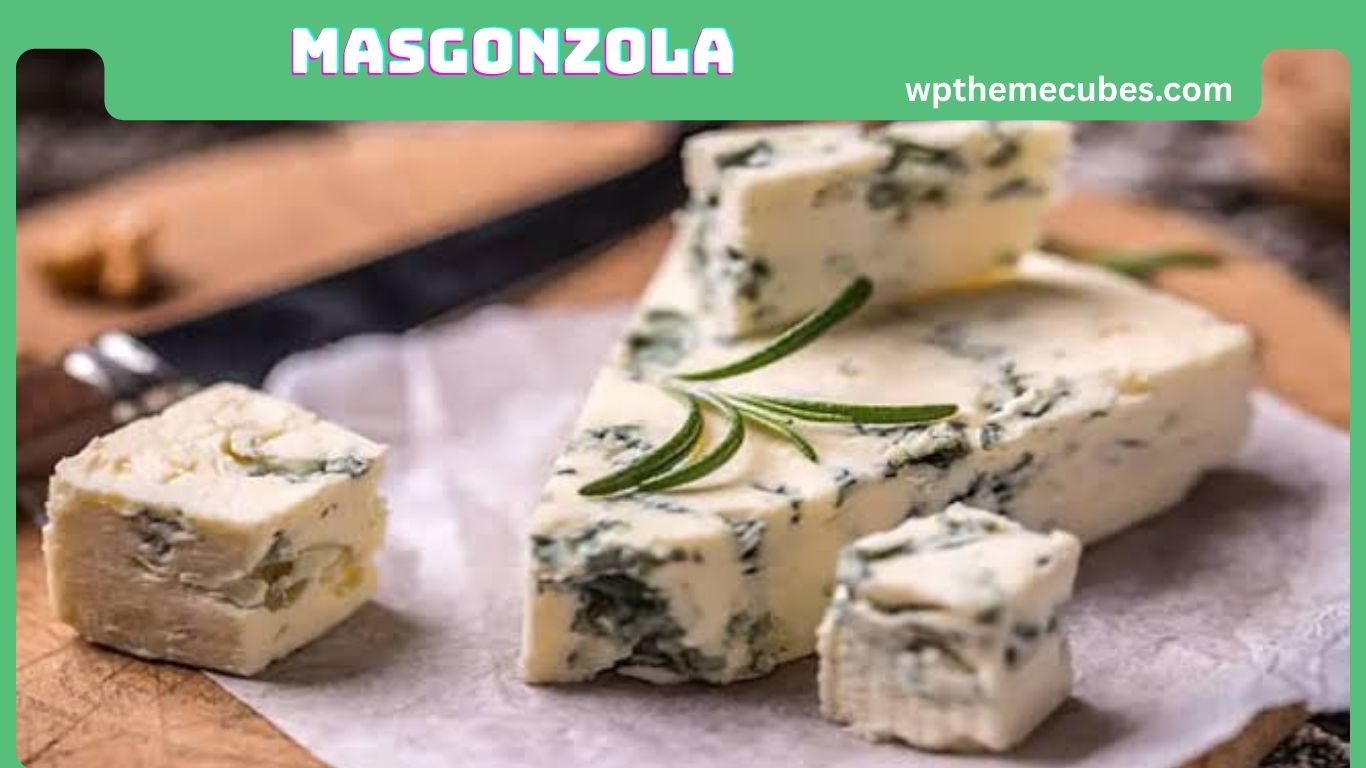
When these two styles are combined, the creamy component can soften the sharper character of the blue cheese. The result is often described as a pale or ivory cheese with blue or greenish veining and a soft, spreadable texture.
However, consumers should not assume that every product labeled or described online as Masgonzola has exactly the same ingredients or production method. Unlike protected cheeses with strict specifications, the term does not appear to have one universally accepted recipe.
That distinction is important for accurate food information.
Is Masgonzola a Real Cheese?
Masgonzola can be discussed as a cheese or cheese-style product, but it should not automatically be treated as a traditional protected cheese with a fixed legal definition.
Gorgonzola has a well-established identity and is protected in the European Union as a PDO product. Mascarpone also has a long history as an Italian dairy product. Masgonzola, however, is much less clearly defined.
Recent sources repeatedly describe it as a modern fusion, culinary concept, or blend rather than an officially protected traditional cheese.
This means the exact meaning of Masgonzola can depend on the producer, chef, retailer, or writer using the word.
For shoppers in the United States, the safest approach is to read the actual product label. Look for the ingredient list, milk source, pasteurization statement where applicable, manufacturer information, storage instructions, and allergen information.
The name alone should not be treated as a guarantee of a specific recipe.
Also Read:Thesindi com: The Website, Content, Safety, Privacy, and Online Presence
Masgonzola and the Meaning Behind Its Name
The name Masgonzola sounds familiar because it resembles Gorgonzola while also suggesting mascarpone.
This type of naming is common in modern food culture. Chefs, food creators, and small producers sometimes create descriptive names by combining two recognizable ingredients or culinary traditions.
In the case of Masgonzola, the name immediately suggests two ideas:
- Mascarpone for creaminess
- Gorgonzola for blue-cheese character
That makes the term easy to understand even for people who have never tasted it.
Still, the attractive name can create confusion. A name that sounds Italian does not automatically mean that a product is a traditional Italian cheese or that it comes from Italy.
Consumers should distinguish between a product’s name and its verified origin.
The Connection Between Masgonzola and Gorgonzola
Gorgonzola is one of the most important reference points for understanding Masgonzola.
Gorgonzola is an Italian blue-veined cheese traditionally associated with northern Italy, especially Lombardy and Piedmont. It is made from cow’s milk and is available in different styles, including Gorgonzola Dolce and Gorgonzola Piccante.
Gorgonzola Dolce is generally softer and milder, while Gorgonzola Piccante has a firmer texture and stronger flavor.
Modern descriptions of Masgonzola often mention Gorgonzola Dolce because its creamy and relatively gentle character works naturally with mascarpone.
This connection helps explain why Masgonzola is often described as a softer introduction to blue cheese.
Mascarpone: The Creamy Side of Masgonzola
To understand Masgonzola, it helps to understand mascarpone.
Mascarpone is an Italian fresh dairy product with a thick, creamy texture. It is famous around the world because of its use in tiramisu, but it also appears in sauces, desserts, spreads, and savory dishes.
Unlike aged blue cheese, mascarpone does not normally provide a strong moldy or pungent flavor. Its main contribution is texture and richness.
In a Masgonzola-style combination, mascarpone can provide:
- A smooth mouthfeel
- Creaminess
- Mild dairy sweetness
- A soft texture
- Richness
- A gentle finish
These qualities can balance the stronger sensory characteristics associated with blue cheese.
Gorgonzola: The Blue-Veined Side
Gorgonzola provides the character that makes Masgonzola visually and aromatically different from ordinary cream cheese.
Blue-veined cheeses develop distinctive blue or blue-green areas through controlled cheese-making processes involving selected mold cultures. These cultures are part of the traditional production of many blue cheeses.
Gorgonzola has a recognizable combination of creamy dairy notes, tanginess, savory depth, and earthy characteristics.
The intensity depends on the specific Gorgonzola style, age, and production method.
When a milder Gorgonzola is combined with mascarpone, the resulting product can have a more rounded flavor than a strongly aged blue cheese.
What Does Masgonzola Taste Like?
Masgonzola is generally described as creamy first, followed by mild blue-cheese tang and earthy savory notes.
The exact flavor can vary because the term is not standardized. Still, descriptions commonly focus on a balance between richness and blue-cheese character.
A typical flavor experience may include:
- Creamy dairy notes
- Mild tanginess
- Slight sweetness
- Earthy blue-cheese character
- Soft savory flavor
- A gentle pungent finish
People who dislike very strong blue cheeses may find this style more approachable.
At the same time, someone expecting ordinary mascarpone may be surprised by the blue-cheese aroma and tang.
The key idea is balance.
Masgonzola is interesting because its appeal comes from the contrast between two different sensory experiences: soft creaminess and blue-cheese complexity.
Masgonzola Texture and Appearance
Texture is one of the most frequently mentioned characteristics of Masgonzola.
It is often described as soft, creamy, semi-soft, or spreadable. Some versions may be firm enough to slice, while others may be better suited to spreading.
The appearance commonly described online includes a pale cream, ivory, or light yellow base with blue or blue-green veins.
The exact appearance can change depending on how the cheese is produced.
A product that is actually made by combining mascarpone with Gorgonzola may show obvious contrast between white cream and blue cheese. A more thoroughly blended product may have a more uniform appearance.
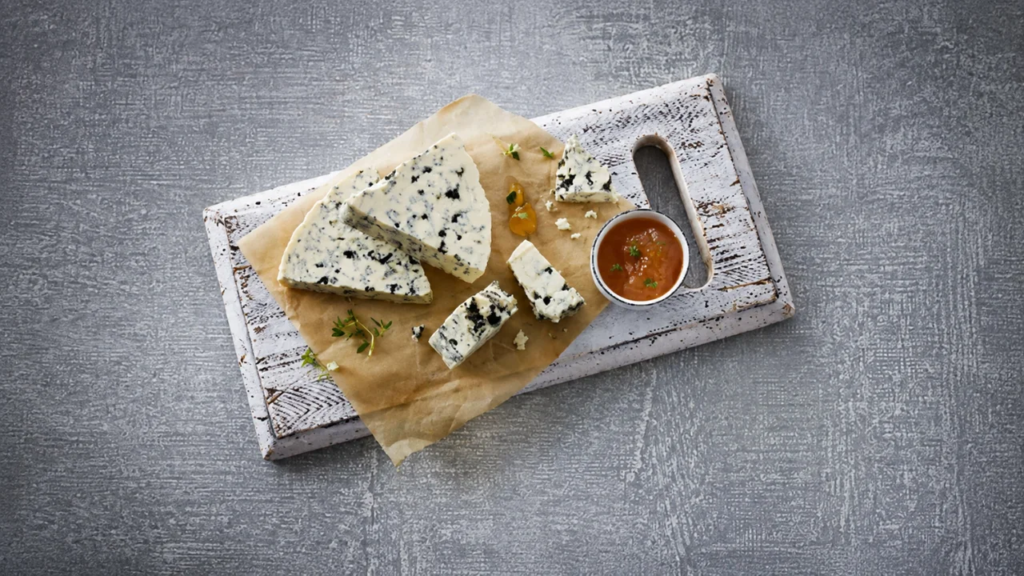
Consumers should also understand that blue veining itself is not automatically a sign that cheese has spoiled. Blue cheeses are intentionally made with specific cultures.
The important issue is whether the cheese looks and smells as expected for that particular product and whether it has been stored correctly.
How Masgonzola May Be Made
There is no single universally accepted Masgonzola production standard, so descriptions of its production should be treated as examples rather than a fixed recipe.
A commonly described approach begins with mascarpone and Gorgonzola, often the softer Dolce style. The two components may be layered, folded, or combined to create a marbled appearance.
A simplified conceptual process looks like this:
- Prepare or obtain the creamy mascarpone component.
- Select an appropriate Gorgonzola-style blue cheese.
- Combine the two components carefully.
- Preserve some of the blue veining instead of completely homogenizing the mixture.
- Chill and store the finished product under suitable conditions.
- Serve it fresh according to the product’s instructions.
Actual commercial production can be more complicated.
Food manufacturers must control ingredients, sanitation, temperature, moisture, cultures, packaging, and shelf life. The final characteristics depend heavily on these factors.
Why Blue Veins Appear in Masgonzola
The blue or blue-green veins associated with Masgonzola come from the blue-cheese component.
Blue cheeses use selected mold cultures during production. These cultures help create the characteristic color, aroma, and flavor associated with the category.
This is very different from random mold growing on forgotten food.
Food-grade cheese production is controlled through carefully managed processes.
Still, consumers should not assume that every unexpected patch of mold on a cheese product is safe simply because the cheese itself contains mold cultures.
A product’s label, storage instructions, appearance, and freshness all matter.
Masgonzola vs. Gorgonzola
Masgonzola and Gorgonzola are related in flavor concept but should not be treated as identical.
Gorgonzola is an established Italian cheese with a defined production identity and protected designation. Masgonzola is generally presented online as a newer fusion or cheese concept.
The major differences can be summarized this way:
| Feature | Masgonzola | Gorgonzola |
| General identity | Modern fusion or cheese-style concept | Traditional Italian cheese |
| Main inspiration | Mascarpone and Gorgonzola | Traditional Italian blue cheese |
| Texture | Often very creamy or spreadable | Varies by style |
| Flavor | Usually creamy and milder | Mild to strong depending on style |
| Blue character | Often softened by creaminess | More direct blue-cheese profile |
| Legal identity | Not clearly standardized | Protected PDO cheese |
| Culinary role | Spreads, sauces, boards, creative dishes | Boards, pasta, sauces, salads, many classic dishes |
The most important difference is standardization.
Gorgonzola has a recognized identity. Masgonzola can refer to a broader modern interpretation.
Masgonzola vs. Mascarpone
Masgonzola should also not be confused with mascarpone.
Mascarpone is a soft, fresh Italian dairy product with a mild taste. It is not normally characterized by blue veins.
Masgonzola, when used to describe a mascarpone-Gorgonzola combination, adds blue-cheese flavor and visual character.
The difference is therefore easy to understand:
Mascarpone focuses on creaminess.
Masgonzola focuses on creaminess plus blue-cheese complexity.
This distinction can help shoppers understand why a recipe calling for mascarpone may not work exactly the same way with a blue-veined cheese blend.
Masgonzola vs. Other Blue Cheeses
Masgonzola is often compared with other blue cheeses because of its veining and flavor.
Common blue-cheese comparisons include:
Roquefort
Roquefort is a famous French blue cheese made from sheep’s milk. It is known for a strong, salty, tangy flavor.
Compared with a creamy Masgonzola-style cheese, Roquefort is generally more intense.
Stilton
Stilton is a classic English cheese with a distinctive blue-veined structure. It can offer a rich, savory flavor with varying levels of intensity.
Masgonzola is generally described as softer and more cream-forward.
Gorgonzola
Gorgonzola is the closest comparison because it is one of the main inspirations for the Masgonzola concept.
Brie
Brie is not a blue cheese, but it can be useful as a texture comparison. Brie is soft and creamy, but its flavor and mold characteristics are different from blue-veined cheeses.
How Strong Is Masgonzola?
The answer depends on the specific product.
A Masgonzola-style blend made with mild Gorgonzola Dolce may taste relatively gentle. A version containing a stronger blue cheese may be more intense.
This is one reason online descriptions should not be treated as an exact product specification.
If you are new to blue cheese, look for descriptions such as:
- Mild
- Creamy
- Dolce
- Soft
- Gentle
- Spreadable
If you enjoy stronger blue cheese, you may prefer products with more pronounced blue flavor or a firmer, more aged component.
How to Eat Masgonzola
Masgonzola can be used in many of the same situations as other soft and blue-veined cheeses.
A simple way to try it is on bread or crackers.
You can also serve it on a cheese board with ingredients that balance its richness.
Good complementary foods may include:
- Pears
- Apples
- Figs
- Grapes
- Honey
- Walnuts
- Almonds
- Rustic bread
- Crackers
- Fresh greens
Sweet ingredients are especially useful because they can create contrast with the tangy and savory character of blue cheese.
Masgonzola on a Cheese Board
A cheese board is one of the easiest ways to introduce a Masgonzola-style cheese.
Instead of making it the only cheese, use it as one part of a broader selection.
For example, a balanced board might contain:
- A mild soft cheese
- A medium-strength cheddar
- A Masgonzola-style blue cheese
- Fresh fruit
- Dried fruit
- Nuts
- Crackers
- Honey
This gives guests different flavors and textures.
If your guests are unfamiliar with blue cheese, place the Masgonzola near milder cheeses rather than making it the strongest option on the board.
Cooking With Masgonzola
Creamy blue-cheese styles can work particularly well in warm dishes.
Masgonzola may be used in:
- Pasta sauces
- Risotto
- Pizza
- Flatbreads
- Burgers
- Sandwiches
- Stuffed vegetables
- Mashed potatoes
- Cream sauces
- Salads
- Bruschetta
Because the cheese can be rich, a small amount may provide significant flavor.
This is useful in home cooking. You do not always need a large quantity of blue cheese to make a dish taste different.
Masgonzola Pasta
A creamy Masgonzola-style pasta sauce can be a simple way to use the cheese.
The basic concept is to melt the cheese gently with a suitable creamy base and combine it with cooked pasta.
Ingredients can include:
- Masgonzola-style cheese
- Pasta
- Milk or cream
- Black pepper
- Garlic
- Parmesan, if desired
- Fresh herbs
The cheese should be heated gently.
Very high heat can cause dairy-based sauces to separate or become oily. Gentle heating helps preserve a smoother texture.
Because Masgonzola products can differ, adjust the amount of added salt carefully.
Masgonzola on Pizza and Flatbread
Blue cheese can add depth to pizza, especially when paired with sweet or earthy ingredients.
A Masgonzola-style cheese can be paired with:
- Pear
- Caramelized onion
- Mushrooms
- Walnuts
- Spinach
- Roasted vegetables
- Fresh herbs
A small amount is often enough.
The goal is to create contrast rather than cover the entire pizza with a heavy layer of cheese.
Masgonzola in Salads
A creamy blue-cheese style works well in salads because crisp vegetables can balance its richness.
Try combinations involving:
- Mixed greens
- Pears
- Apples
- Walnuts
- Cucumbers
- Roasted beets
- Tomatoes
- Light vinaigrettes
A slightly acidic dressing can help balance the creamy cheese.
Balsamic-style dressings are a common pairing idea because sweet and acidic flavors work naturally with rich cheese.
Masgonzola With Fruit and Honey
Fruit and honey are particularly useful pairings for blue cheese.
The sweetness of honey can soften the perception of tanginess. Pears and figs can add freshness and natural sweetness.
For a simple snack, place a small amount of Masgonzola-style cheese on a cracker and add a thin drizzle of honey.
This approach lets you experience the cheese without combining it with complicated ingredients.
Masgonzola and Nuts
Nuts add crunch and earthy flavor.
Walnuts are a natural pairing for many blue cheeses, but almonds, pecans, and hazelnuts can also work.
A cheese board with Masgonzola, pears, walnuts, and crackers provides several contrasting textures:
- Soft cheese
- Crisp fruit
- Crunchy nuts
- Crisp crackers
This makes the overall eating experience more interesting.
Beverage Pairings for Masgonzola
Pairing depends on the strength of the cheese.
Also Read:USPhoneLookup: A Complete Guide
For a mild, creamy Masgonzola-style product, options may include:
- Sparkling water
- Apple juice
- Pear juice
- Light white wine
- Sweet wine
- Tea
- Coffee in some dessert applications
If choosing alcoholic beverages, always follow applicable age and legal requirements.
The general pairing principle is simple: strong cheese often benefits from a beverage that can refresh the palate, while a mild creamy cheese can work with lighter drinks.
Masgonzola Nutrition
Masgonzola nutrition cannot be stated accurately with one universal nutrition label because the term does not appear to represent one standardized recipe.
The nutritional profile depends on the ingredients and proportions used.
Because mascarpone and Gorgonzola are both dairy products, a Masgonzola-style blend may be relatively rich in:
- Fat
- Saturated fat
- Calories
- Protein
- Calcium
The exact values can vary substantially.
For Americans tracking calories, sodium, saturated fat, or other dietary factors, the best source is the Nutrition Facts label on the actual product.
Online articles should not be used as a replacement for a manufacturer’s nutrition panel.
Is Masgonzola Healthy?
It is better to avoid calling Masgonzola simply “healthy” or “unhealthy.”
Cheese can provide useful nutrients such as protein and calcium, but many rich cheeses also contain substantial amounts of calories, saturated fat, and sodium.
The appropriate serving size matters.
For most people, cheese can fit into a balanced diet when consumed in reasonable amounts alongside vegetables, fruits, whole grains, and other nutritious foods.
People with specific dietary needs should check the product label and speak with a qualified health professional when necessary.
Is Masgonzola Safe to Eat?
Food safety depends on the actual product, its production process, and how it has been stored.
Blue-veined cheeses are intentionally made using selected cultures, but that does not mean all mold growth on food is harmless.
Consumers should:
- Follow the package storage instructions.
- Keep cheese refrigerated when required.
- Check expiration or use-by information.
- Avoid products with damaged packaging.
- Pay attention to unusual changes in smell, texture, or appearance.
- Use clean utensils when serving.
- Avoid leaving perishable cheese at room temperature for extended periods.
People who are pregnant, immunocompromised, older, or otherwise at higher risk from foodborne illness should follow guidance from trusted health authorities and carefully check whether a particular cheese is made from pasteurized milk.
Pasteurized vs. Unpasteurized Cheese
The milk source is an important consideration for some consumers.
In the United States, cheese labels can provide information about pasteurization and ingredients. If pasteurization matters to you, check the package rather than relying on an online description.
This is especially important because Masgonzola does not appear to have one universal production standard.
One product may differ from another in milk source, production method, aging, packaging, and handling requirements.
How to Store Masgonzola
If you purchase a Masgonzola-style cheese, follow the manufacturer’s storage instructions first.
Generally, perishable cheese should be kept refrigerated.
For best quality:
- Keep it wrapped according to the package directions.
- Store it in a clean refrigerator.
- Protect it from strong odors when appropriate.
- Avoid unnecessary temperature changes.
- Use clean utensils.
- Consume it within the recommended period.
Soft and creamy cheeses can be particularly sensitive to improper storage.
Do not assume that freezing is always a good solution. Freezing may change the texture, especially in creamy products.
How to Tell If Masgonzola Has Gone Bad
This can be difficult because blue-veined cheese already has a distinctive appearance and aroma.
The best approach is to compare the product with its normal characteristics and follow the manufacturer’s guidance.
Warning signs may include:
- Unusual discoloration outside the expected blue veining
- Unexpected sliminess
- Damaged or swollen packaging
- Strong unpleasant odors that differ from the normal cheese aroma
- Significant changes in texture
- Mold growth that does not match the product’s intended characteristics
When in doubt, it is safer not to eat a questionable perishable food.
Where Can You Buy Masgonzola in the United States?
Availability may be inconsistent because Masgonzola is not as widely standardized or distributed as mainstream cheeses.
People searching for it may find references through:
- Specialty cheese shops
- Italian delis
- Gourmet food stores
- Artisan cheesemakers
- Specialty food websites
- Imported-food retailers
- Local cheese counters
However, shoppers should verify exactly what they are purchasing.
A search result using the word “Masgonzola” does not necessarily mean the product is an established traditional cheese.
Read the product description and ingredient list carefully.
What Should You Look for on a Masgonzola Label?
If you encounter a Masgonzola product in a U.S. store, check several details.
First, identify the ingredients.
Second, check the milk source and pasteurization information when relevant.
Third, review the Nutrition Facts panel.
Fourth, check storage instructions.
Fifth, look for the producer or manufacturer.
Finally, check whether the product is being sold as a specific branded cheese, a blend, or a general cheese style.
This approach is more reliable than judging a product by its name alone.
Why Masgonzola Is Interesting in Modern Food Culture
Masgonzola reflects a broader trend in modern food: combining familiar ingredients to create something new.
Consumers increasingly enjoy foods that provide more than one flavor experience.
A creamy cheese with blue-cheese character fits that trend because it provides contrast in one product.
It also demonstrates how food names can spread online before there is a universally recognized definition.
This is important for digital literacy.
A food term can become popular through blogs, social media, recipe pages, search engines, and food communities without necessarily becoming an officially regulated food category.
The Difference Between Online Popularity and Official Recognition
One of the most important things to understand about Masgonzola is the difference between popularity and formal recognition.
Many websites now publish articles describing Masgonzola as an Italian fusion cheese. However, online repetition does not automatically establish a product’s historical origin, legal status, or traditional classification.
Recent sources disagree on whether Masgonzola should be described as an artisanal Italian cheese, a modern blend, or a conceptual cheese style.
For this reason, careful language is important.
It is reasonable to say that Masgonzola is commonly described as a creamy blue-cheese fusion associated with mascarpone and Gorgonzola.
It is less responsible to claim that it has a centuries-old documented history unless reliable historical evidence supports that claim.
Is Masgonzola an Italian Cheese?
Masgonzola is strongly associated in online descriptions with Italian cheese traditions because both mascarpone and Gorgonzola are Italian products.
However, that association should not be confused with proof that every product called Masgonzola is made in Italy.
A product inspired by Italian cheese can be produced elsewhere.
If geographic origin matters to you, look for a clear country-of-origin statement and manufacturer information.
The same principle applies to any specialty food.
A familiar European-sounding name does not automatically prove geographic authenticity.
The History of Masgonzola: What We Actually Know
The history of Masgonzola is less certain than the histories of mascarpone and Gorgonzola.
Gorgonzola has a long documented tradition in northern Italy. Mascarpone is also deeply connected with Italian culinary history.
Masgonzola, however, appears much more frequently in recent online discussions as a modern combination of these two products.
Some online sources describe it as an artisanal tradition, while others explicitly call it a newer culinary concept.
This difference matters.
A responsible food article should not turn repeated online claims into historical facts without strong evidence.
The safest conclusion is that Masgonzola is best understood as a modern cheese concept inspired by established Italian dairy traditions.
Why People Search for Masgonzola
Search interest in Masgonzola can come from several different intentions.
Some people may see the word in a recipe or social media post and want to know what it means.
Others may be searching for:
- Masgonzola cheese
- Masgonzola taste
- Masgonzola vs Gorgonzola
- Masgonzola ingredients
- Masgonzola nutrition
- Where to buy Masgonzola
- Masgonzola recipes
- Masgonzola cheese board ideas
- Mascarpone and Gorgonzola blend
These searches show that users often want practical information rather than historical information alone.
That is why understanding the difference between a standardized cheese and an emerging culinary term is valuable.
Common Mistakes People Make About Masgonzola
One common mistake is assuming Masgonzola is exactly the same as Gorgonzola.
It is not.
Another mistake is assuming that every Masgonzola-style product contains exactly the same ingredients.
There is no strong basis for that assumption.
A third mistake is treating all blue mold as unsafe or, at the other extreme, assuming all mold on blue cheese is automatically safe.
Both conclusions are too simple.
Another mistake is trusting a food article’s nutrition numbers without checking the actual product label.
Finally, shoppers should not assume that a product is made in Italy simply because its name sounds Italian.
How to Choose a Good Masgonzola-Style Cheese
If you find a Masgonzola-style product, consider the following factors:
Check the Ingredient List
Look for clear information about what the cheese contains.
Check the Producer
A clearly identified producer provides more useful information than an anonymous online listing.
Check Storage Instructions
Creamy dairy products require proper handling.
Consider Flavor Strength
If you are new to blue cheese, choose a mild version.
Check the Texture
Choose spreadable cheese for crackers and sauces, or a firmer product if you want to slice it.
Read the Nutrition Facts
This helps you understand calories, fat, saturated fat, protein, and sodium per serving.
How to Serve Masgonzola to First-Time Blue Cheese Eaters
If someone has never tried blue cheese, serving it alone may be too strong for their first experience.
A better approach is to create contrast.
Serve a small portion with:
- Pear slices
- Apple slices
- Honey
- Mild crackers
- Walnuts
- Fresh bread
The sweet and crunchy ingredients can balance the rich and tangy cheese.
This is also a good way to compare Masgonzola with a stronger blue cheese.
How Restaurants Could Use Masgonzola
A creamy blue-cheese fusion can have several restaurant applications.
Chefs could use it in sauces, pasta, salads, appetizers, burgers, flatbreads, and cheese boards.
Its main advantage is versatility.
A strong blue cheese may dominate a delicate dish. A creamier blend can provide blue-cheese character while also contributing a smooth texture.
That makes the concept especially interesting for modern menus that focus on balance rather than extreme flavors.
Masgonzola and Home Cooking
Home cooks do not need complicated techniques to experiment with this type of cheese.
A small amount can be added to a simple cream sauce.
It can also be crumbled over a salad or melted onto a flatbread.
The best approach is to start with a small amount.
You can always add more.
This is particularly useful when working with an unfamiliar cheese because flavor strength can vary between products.
Masgonzola as a Food Trend
Masgonzola also offers an interesting example of how food trends develop.
Traditional foods often have clear histories and legal identities.
Modern food culture is different.
Also Read:Labarty: The Digital Identity, Creativity, and Modern Relevance
A combination can become popular because chefs experiment with it, food bloggers write about it, and consumers search for it online.
Eventually, a name may become associated with a particular flavor or product style.
Whether Masgonzola develops into a widely standardized cheese category remains uncertain.
Its current popularity is more important as an example of culinary experimentation than as proof of a long-established cheese tradition.
What Makes Masgonzola Different in 2026?
In 2026, online interest in Masgonzola appears to center mainly on its identity as a creamy alternative to stronger blue cheeses.
Recent publications describe it using terms such as “fusion,” “blend,” “creamy blue cheese,” and “modern culinary concept.”
At the same time, online sources are not completely consistent about its history or official status.
That makes source evaluation especially important.
For readers, the best 2026 approach is not to treat every online claim as established fact. Instead, separate the well-supported characteristics of mascarpone and Gorgonzola from the less certain claims about Masgonzola’s history.
This is a useful example of practical digital literacy in food research.
Frequently Asked Questions About Masgonzola
Is Masgonzola suitable for people who dislike strong cheese?
It may be, depending on the specific product. Masgonzola-style cheese is commonly described as creamier and milder than stronger blue cheeses. The mascarpone component can soften the sharpness associated with Gorgonzola.
However, it can still have a noticeable blue-cheese aroma and flavor, so people who strongly dislike blue cheese may still find it intense.
Can Masgonzola be used instead of cream cheese?
It depends on the recipe. Masgonzola can provide creaminess, but its blue-cheese flavor makes it very different from ordinary cream cheese.
It may work well in savory sauces, spreads, sandwiches, and appetizers where a tangy cheese flavor is welcome. It is usually not a direct substitute when a recipe requires a neutral-tasting cream cheese.
Does Masgonzola always contain mascarpone?
Not necessarily. The term is commonly described online as a combination of mascarpone and Gorgonzola, but there does not appear to be one universally standardized definition.
If you are buying a product marketed as Masgonzola, check its ingredient list to determine exactly what it contains.
Can Masgonzola be used in desserts?
It can potentially work in desserts that benefit from a sweet-and-savory contrast. Creamy blue-cheese styles can pair with honey, figs, pears, nuts, and certain chocolate or fruit preparations.
However, the cheese’s strength should be considered carefully. A mild version is generally more suitable for a dessert application than a highly pungent blue cheese.
Is Masgonzola naturally vegetarian?
You should not assume that every Masgonzola-style product is vegetarian. Cheese production can involve different types of rennet or other processing ingredients.
If vegetarian status is important, check the product’s ingredient list or look for a clear vegetarian certification or statement from the manufacturer.
Final Thoughts on Masgonzola
Masgonzola is an interesting example of how modern food culture can combine traditional ingredients into a new culinary idea.
It is commonly described as a creamy blue-veined cheese associated with mascarpone and Gorgonzola. The mascarpone side contributes richness and smoothness, while the Gorgonzola side contributes blue veining, tanginess, earthiness, and savory depth.
The most important point is that Masgonzola should not automatically be treated as a centuries-old, legally standardized cheese in the same way as Gorgonzola. Current online sources vary considerably in how they describe its origins and status.
For consumers, the practical lesson is simple: focus on the actual product rather than the name alone. Check ingredients, origin, nutrition information, storage instructions, and producer details before buying.
For cooking, Masgonzola-style cheese can be an appealing choice when you want the richness of a creamy cheese with the complexity of blue cheese. It can work on cheese boards, pasta, pizza, salads, flatbreads, sandwiches, and other savory dishes.
The broader appeal of Masgonzola comes from balance. It represents the meeting point between familiar creaminess and distinctive blue-cheese character. Whether the term eventually becomes a widely recognized cheese category or remains a flexible culinary description, it is a useful example of how traditional flavors continue to inspire new food ideas.